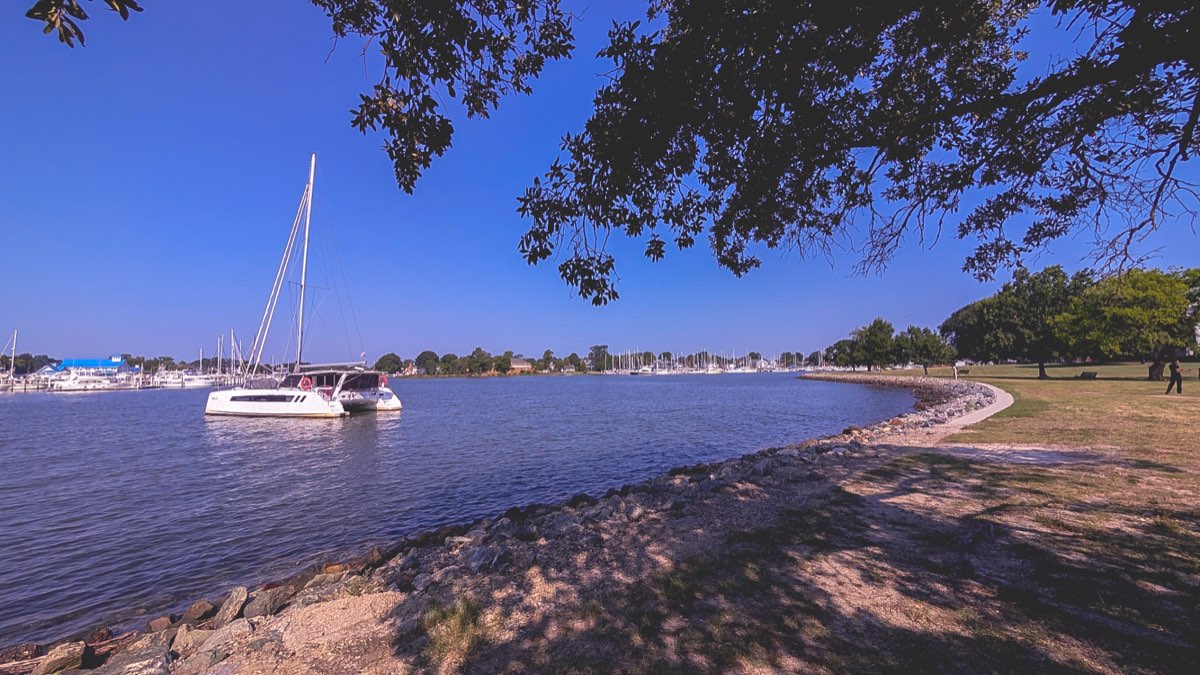
Hampton University - Our Home by the Sea - Since 1868

Where Tradition Meets Innovation.

More Than a Band. A Force. Pedagogy, leadership, and precision moving at 220 beats per minute. Over a century and a half of sound, swagger, and standard.

200+
Members Strong
158
Years Marching
THE Standard of Excellence
The Epitome of ExcellenceThe EliteThe UntouchableThe Beast from The EastThe Ivy League of Marching BandsThe Smartest Band in the LandThe Epitome of ExcellenceThe EliteThe UntouchableThe Beast from The EastThe Ivy League of Marching BandsThe Smartest Band in the Land
The Experience

Scholars. Performers. Leaders.

On the field. In the classroom. Beyond. Every horn, every high-step, every halftime is built on a foundation of pedagogy, leadership, and operational excellence.

The Brass

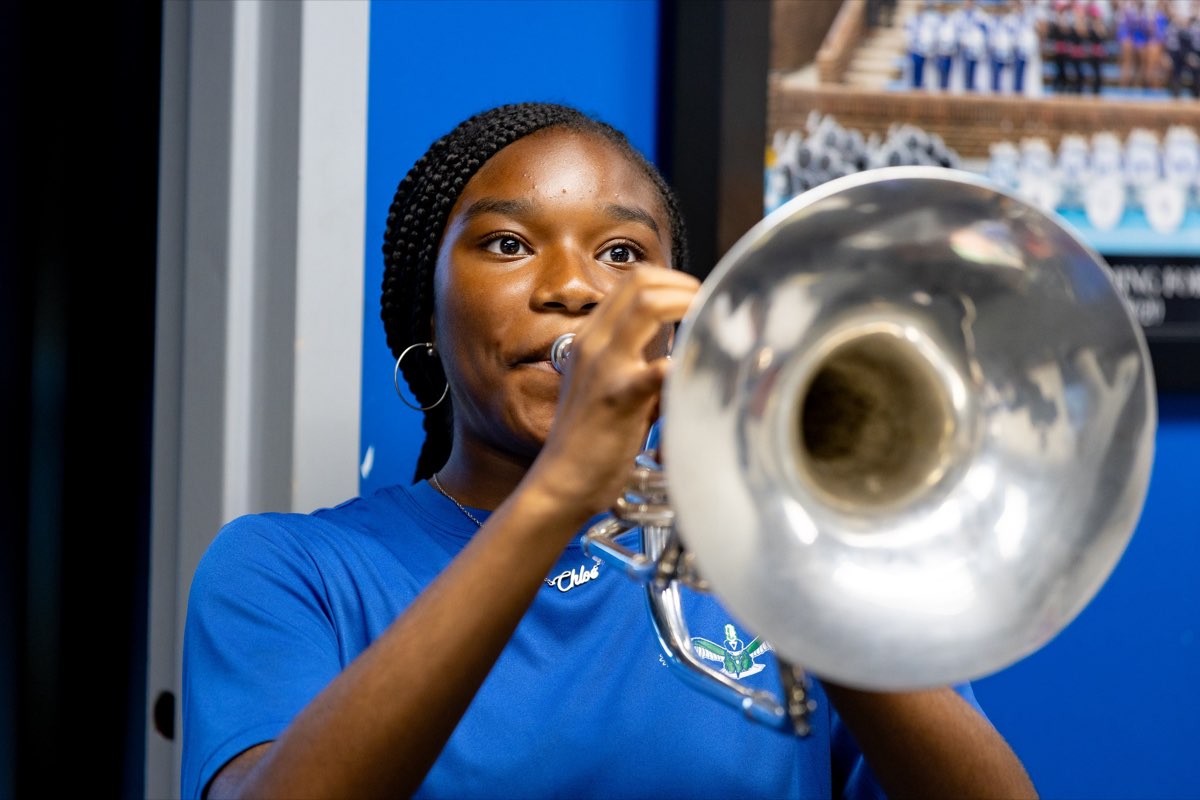
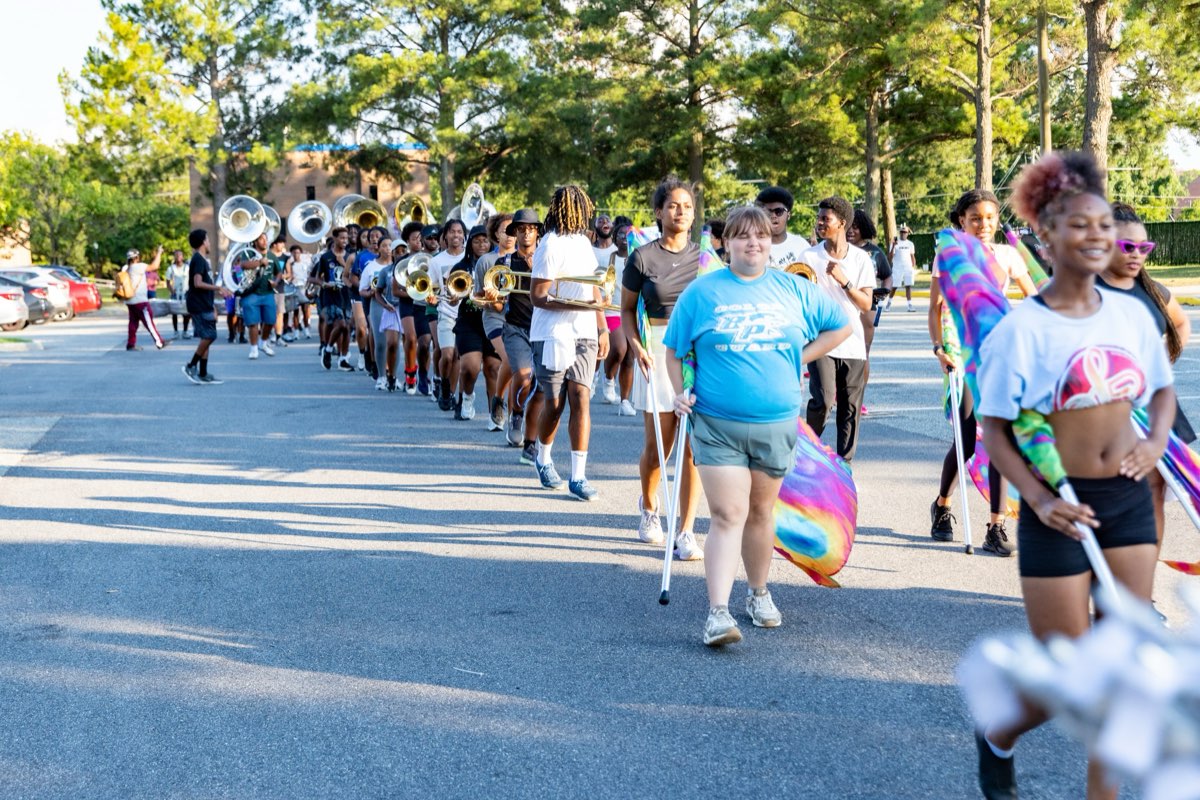
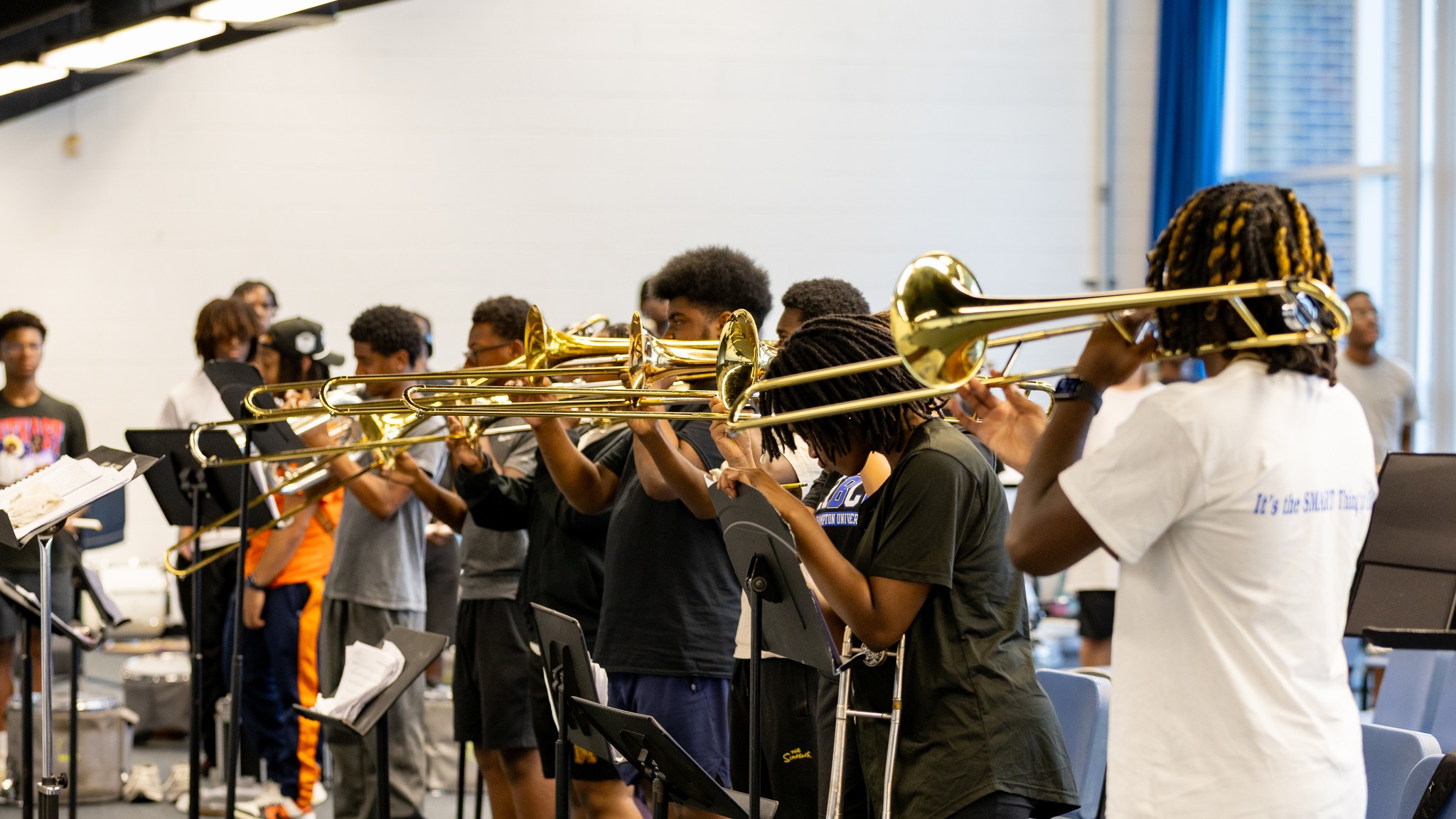
The Brass section serves as the sonic engine of the Marching Force. Comprising the High Brass (Trumpets, Mellophones, Flugelhorns) and Low Brass (Trombones, Baritones, Euphoniums, and Sousaphones), this unit is dedicated to the 'Hampton Sound'—a perfect marriage of symphonic resonance and aggressive, soulful projection. Here, precision meets power.

The Woodwinds

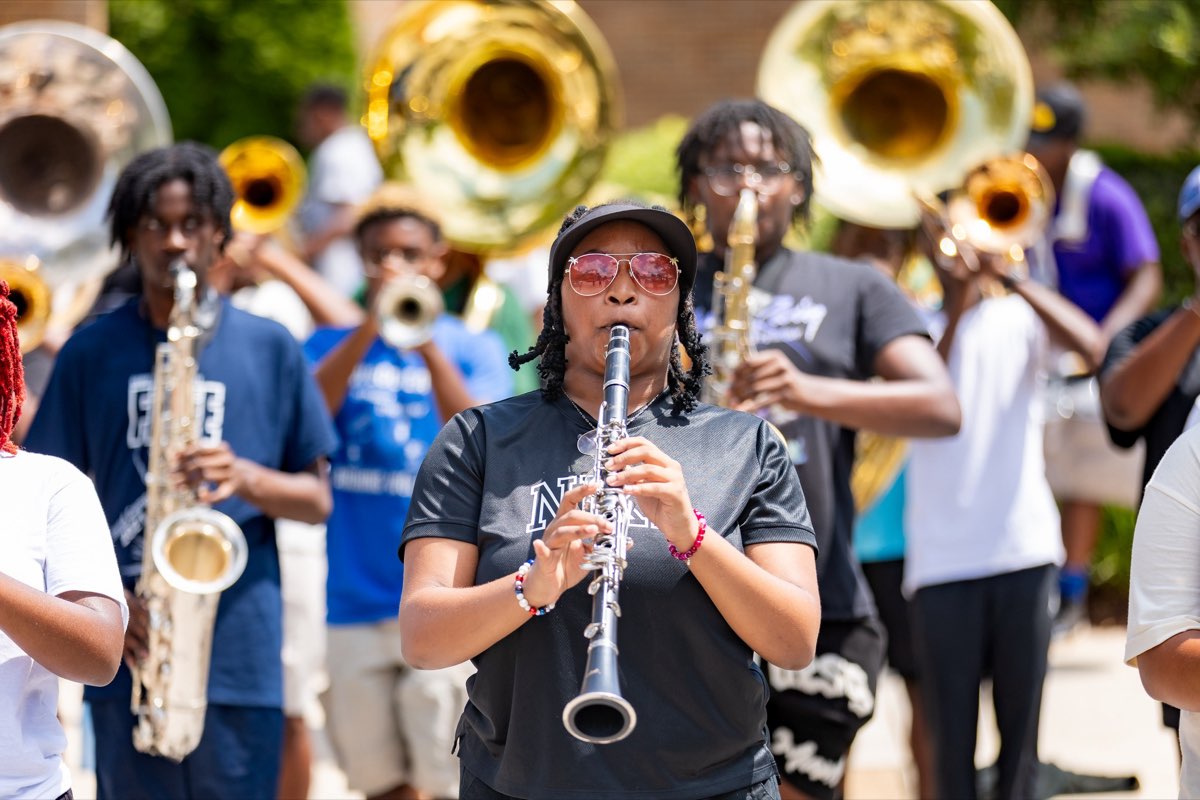
The Woodwind section provides the intricate technical detail and melodic brilliance that defines our ensemble's versatility. Featuring the Piccolo, Clarinet, and Alto and Tenor Saxophones, our woodwinds navigate complex runs and lyrical passages with effortless agility, adding a sophisticated layer of texture to the Force’s wall of sound.

The Percussion

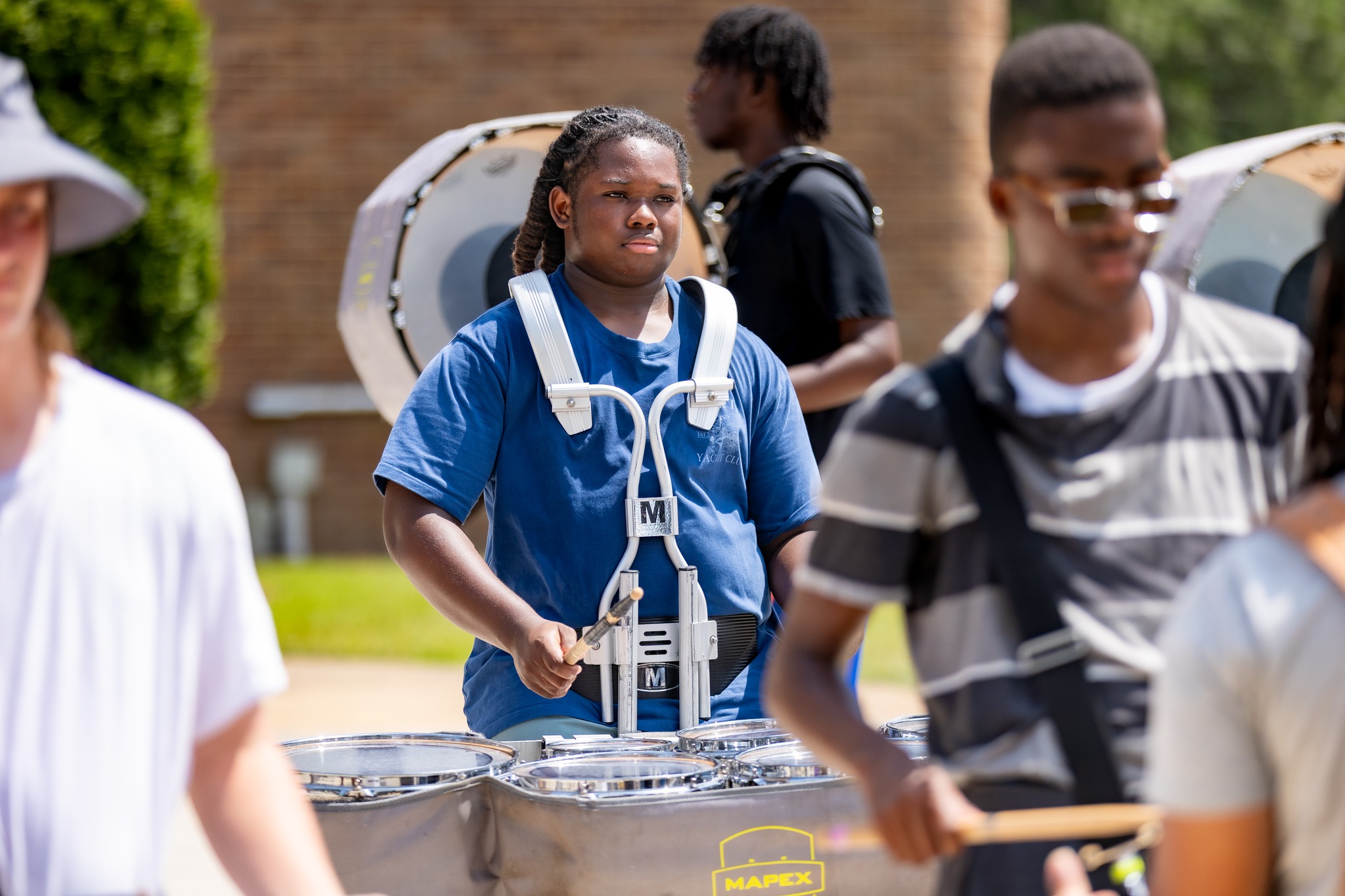
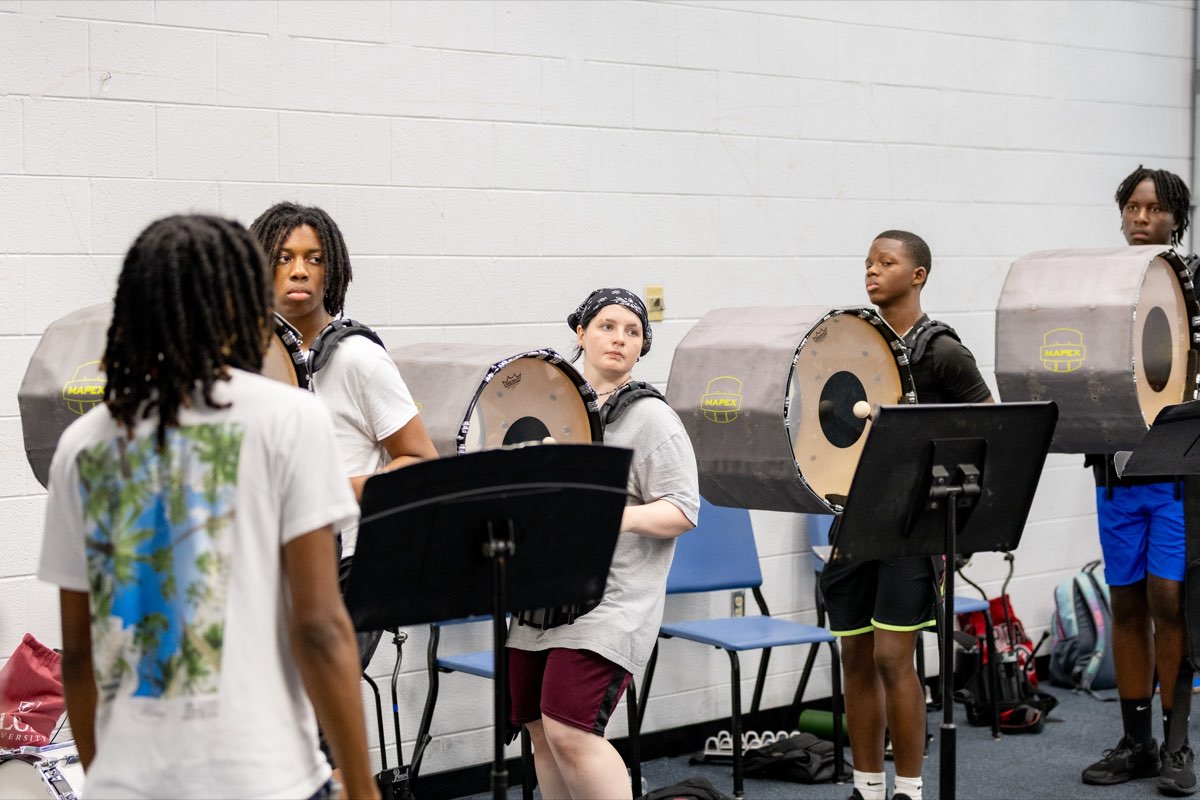
Known as 'Sticky Situation,' the Percussion section is the rhythmic foundation of every performance. From the thunderous cadence of the bass line to the lightning-fast precision of the snares and tenors, Sticky Situation combines world-class rudimental drumming with the signature flair and innovation of the HBCU tradition.

The Flags

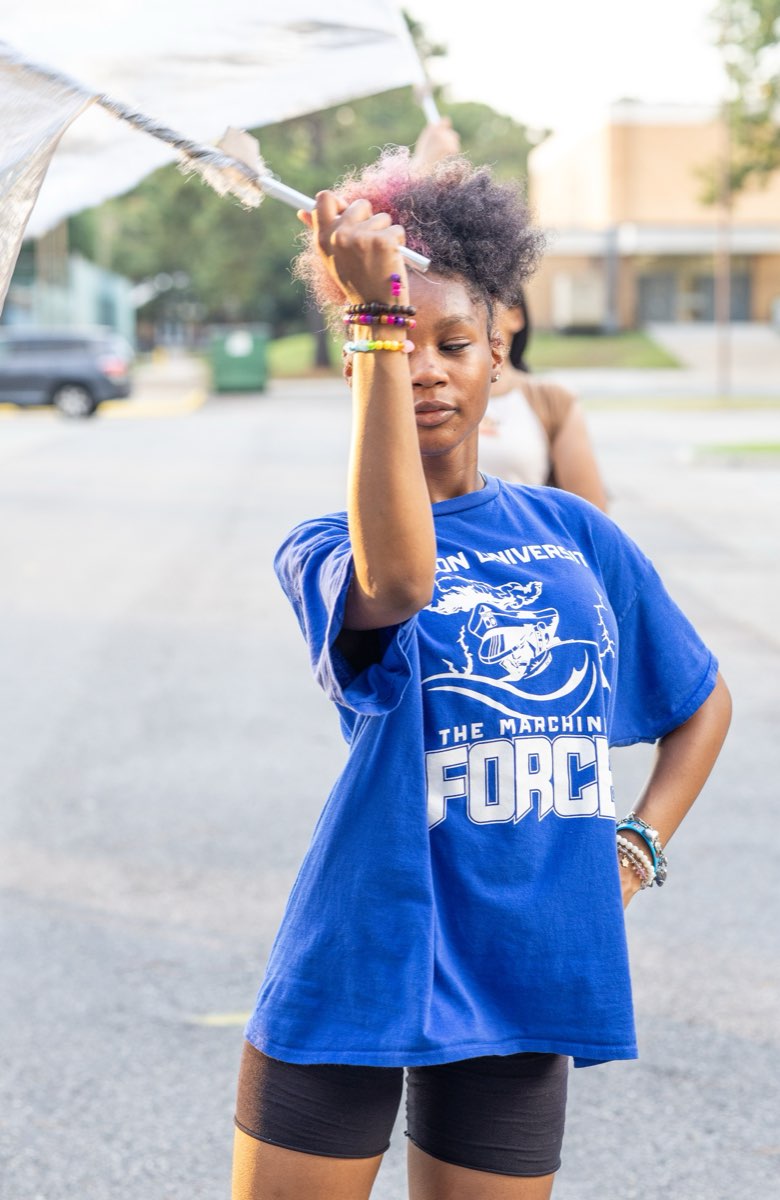
The 'Silky' Flag Line provides the essential splash of color and motion that completes our field presence. Combining dance technique with rigorous flag work, the Silky auxiliary executes complex synchronized routines that amplify the music’s impact, creating a panoramic visual experience for every spectator.

The Dancers

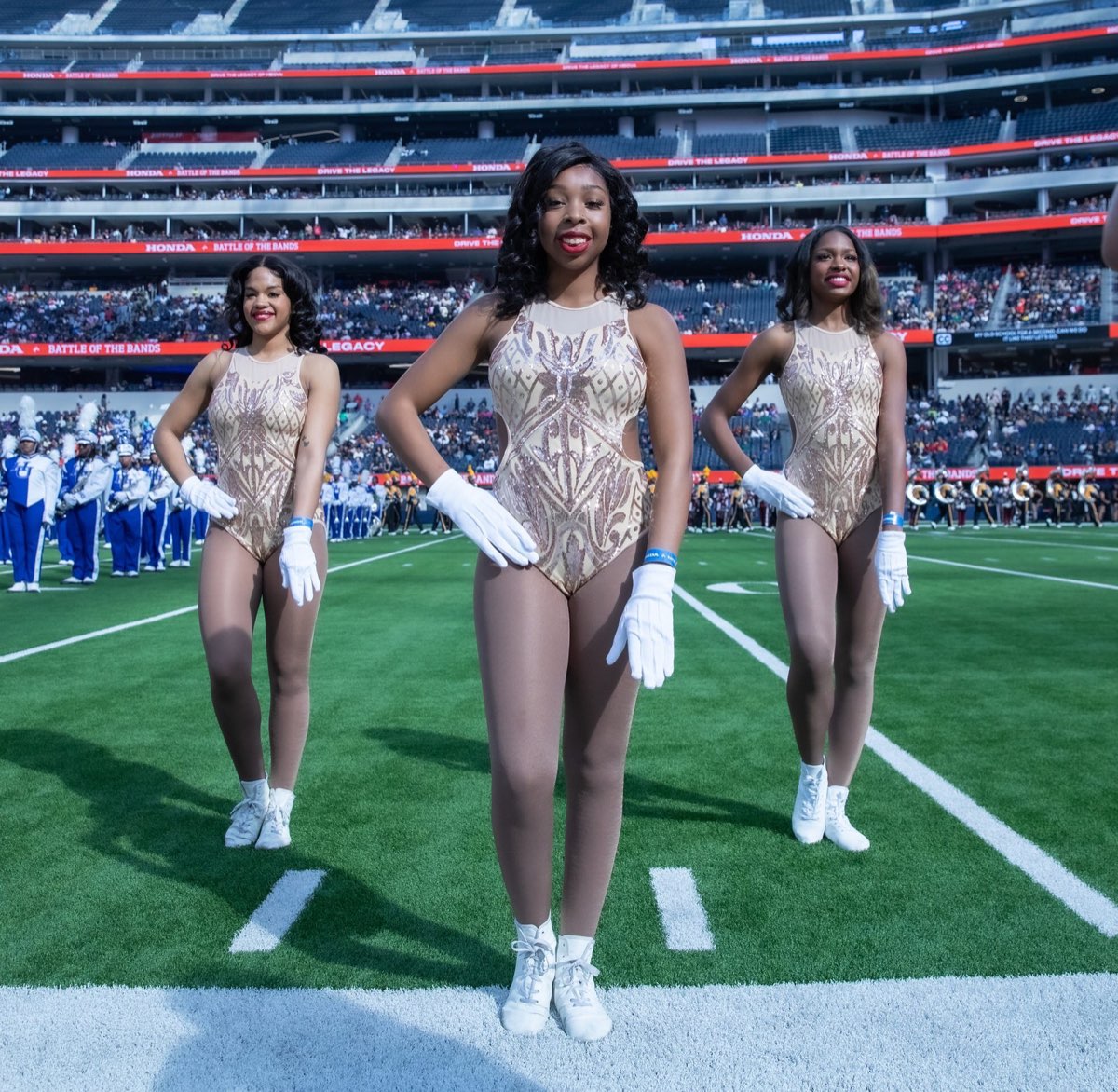
Ebony Fire is the premier dance auxiliary of The Marching Force, embodying grace, athleticism, and high-energy showmanship. With a repertoire that spans contemporary, jazz, and traditional HBCU styles, Ebony Fire brings the music to life through visually stunning choreography and an unmatched performance presence.

The Baton Twirlers

Shimmering Sapphire Elegance represents the pinnacle of elite baton artistry. Characterized by high-altitude tosses and intricate contact work, our twirlers combine gymnastic agility with rhythmic grace, serving as a dazzling focal point of the Force’s visual presentation.

The Drum Majors

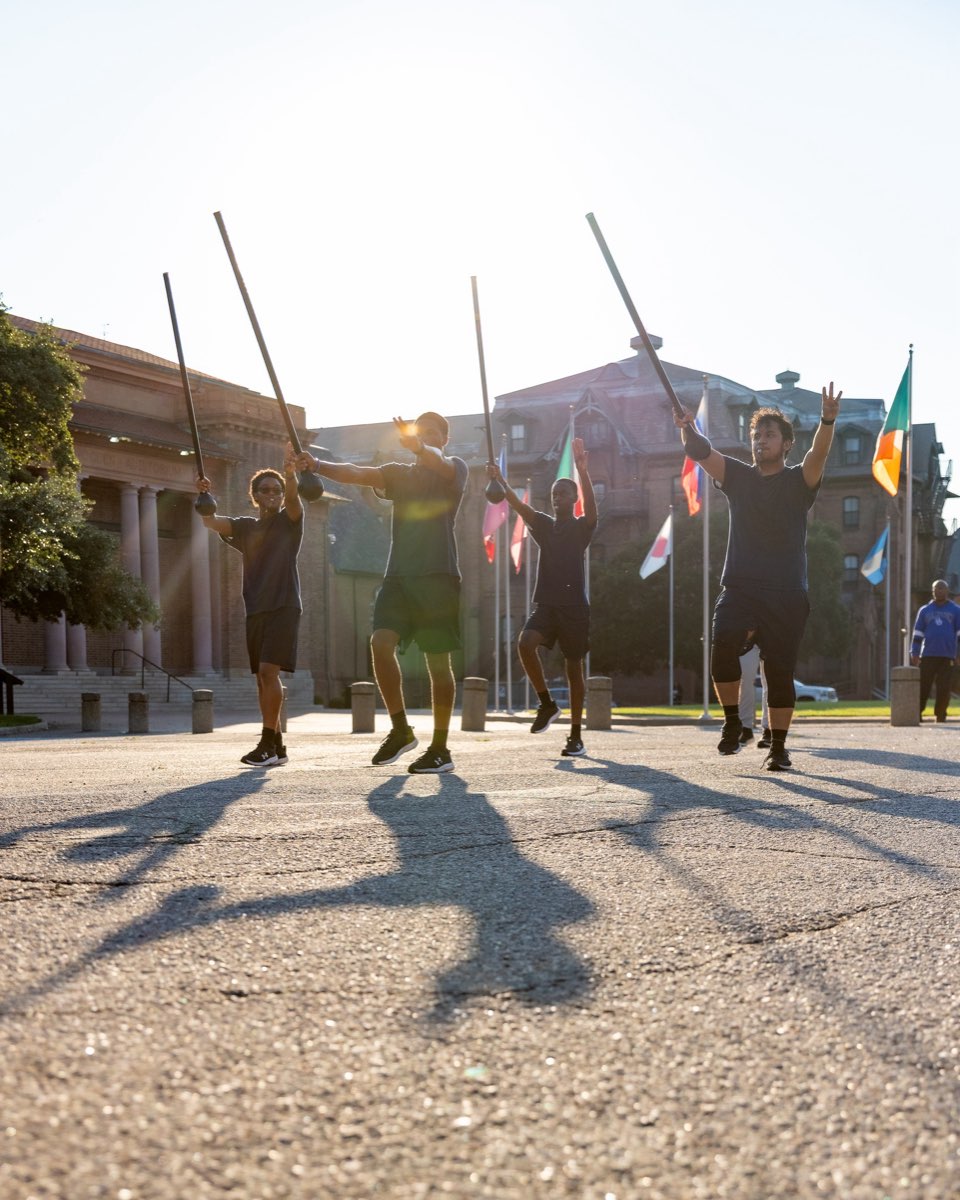
The Drum Majors are the pinnacle of student leadership in The Marching Force. Conducting every performance, setting every tempo, and representing the band in front of every audience — from the campus quad to the stadium tunnel to international stages, they are the field generals who lead the band into every battle.

The Managers

The 'Black Diamond' Management Team is the logistical backbone of The Marching Force. Responsible for equipment accountability, uniform management, and the seamless execution of band movement, the Black Diamonds ensure that the ensemble is mission-ready at all times. Behind every great performance is the precision of the Diamond.

The Media Team

The 'Hi-Def' Media Team captures the legacy of The Marching Force in real-time. Through professional photography, high-definition videography, and strategic social media storytelling, Hi-Def documents the sweat, the discipline, and the triumph of the band. They are the eyes of The Marching Force, sharing our story with a global audience.

The Production Team

The Production Team is the creative force behind the flawless visual presentation of our auxiliary units. Specializing in precision hair, makeup, and aesthetic coordination for Ebony Fire, Silky, and Shimmering Sapphire Elegance, this team ensures that every performer reflects the elite branding of The Marching Force. By blending high-fashion artistry with the demands of athletic performance, the Production Team guarantees that our visual impact is as polished and professional as our musical execution.

Rooted in Legacy. Driven by Innovation.

Rooted in a Hampton tradition that stretches back to our institution’s founding in 1868, the Marching Force carries the spirit of our Home by the Sea to the brightest stages in the nation — moving with the weight of an HBCU legacy and the edge of an institution always looking forward.

We perform with passion, lead with integrity, and succeed with purpose — shaped by structured pedagogy, leadership development, and sound operational practice. Excellence isn’t an exception. It’s the baseline. A Force of Excellence.

Our Standard
Drive The Legacy
Est. 1868
Hampton’s Heartbeat

Where The Marching Force has been...

This is a traveling band, presenting our students with new global perspectives and worldviews.

Los Angeles, CA
The Honda Battle of the Bands 2018, 2020, 2025
The premier annual showcase of HBCU marching band excellence and showmanship.
New York, NY
Macy's Thanksgiving Day Parade 2021
The world’s most famous holiday parade.
Rome, Italy
New Year's Day Parade 2020
Italy’s premier international parade featuring prestigious American marching bands in the heart of Rome.
Washington, DC
Presidential Inaugural Parade 2009
The Marching Force was featured in the parade for President Barack Obama.
Hampton’s Heartbeat · A Force in Motion

Are you built for The Marching Force?

Whether you play, dance, lead, or believe in what we stand for, there’s an opportunity for you. Start your audition journey, connect with an alumni chapter, or support the next generation of Marching Pirates.

Hampton University · Summer Intensive

Hampton University Band Camp.

A week of legacy, leadership, and sound. Where rising musicians learn from the best at Our Home by the Sea.

When Summer 2026
Where Hampton, Virginia
Who Rising 7th–12th graders
$600 Residential
$400 Non-Residential
$200 Directors
Bringing 5+ Students? See Group Rates Let's Get Started ↓
About the Camp

Where the next generation of The Marching Force begins.

Hampton University Band Camp is an immersive summer experience for rising 7th–12th graders, designed to sharpen skill, discipline, and pride — the three qualities that define what it means to march with The Marching Force.

Campers rehearse alongside Hampton's staff and student leaders, learning the musicianship, technique, and leadership principles that power Hampton's band program year-round. Evenings bring masterclasses, sectional work, and the kind of tradition you can only experience at an HBCU.

This is where legacy is taught, not told. Come build your future from the Home by the Sea.

Here is what makes HUBC hit different: we run on a "train the trainer" model. You are not just learning a routine and heading home — you are learning how to teach it. That means when you roll back to your school, you come back as a leader who can raise the whole program with you. That is how legacies get built.

Our Goal

Train the Trainer.

At HUBC, it is not enough that you learn songs, a drill, and a dance routine. We want you to not only learn key techniques in order to make you better, but we also want you to learn how to be able to teach it to others so that you can return to your band program and help lead them to excellence. Our instructors will make sure that you learn what they are teaching, and they will teach you the best ways to teach those techniques to others.

Marching Band

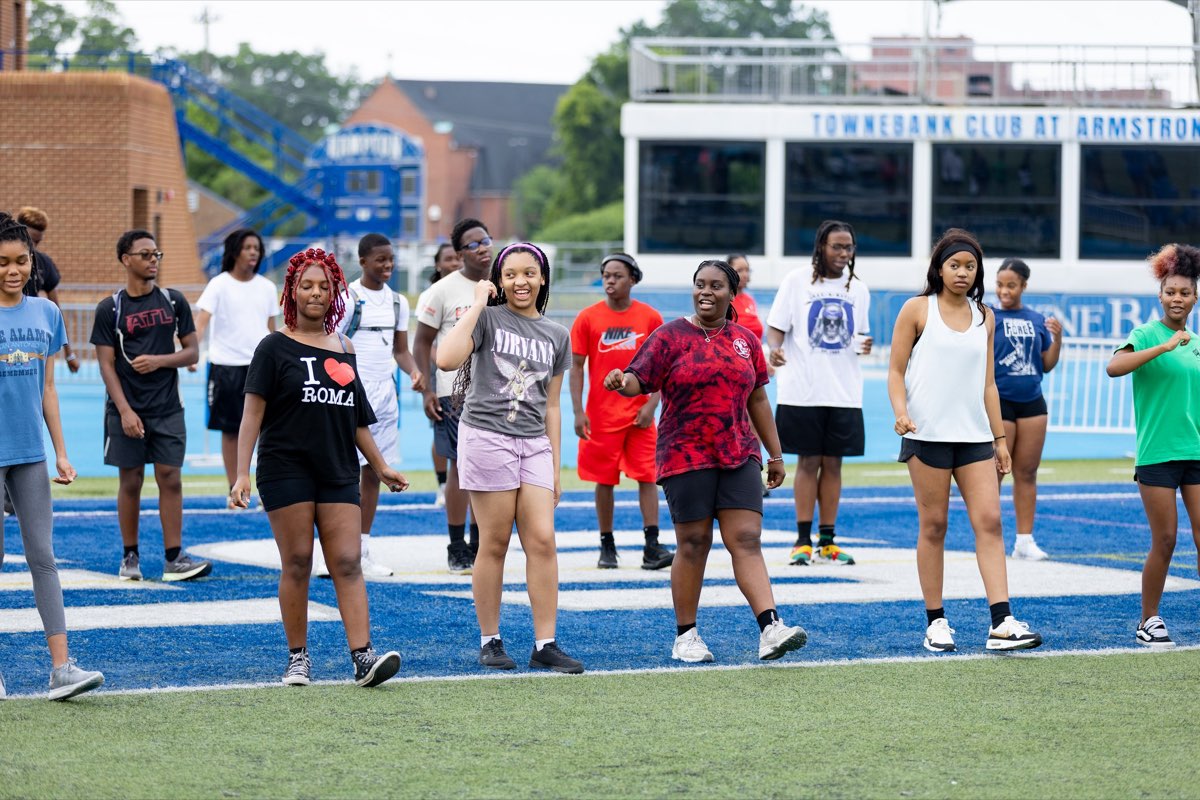
All students and directors will participate in the marching band experience. Throughout the week, students will learn basic and advanced marching techniques, as well as a focus on the style that The Marching Force employs in its performances. Special attention will be given to marching and musical fundamentals so that you can return to your band, share what you have learned, and teach the techniques necessary to help your band excel. The week will culminate with a field show that will highlight key areas (Drum Majors, Auxiliary, Percussion) and also involve a drill and dance routine. Since the playing demands will be heavy, Brass and Woodwind players should prepare for HUBC by brushing up on their major and chromatic scales, as well as fundamentals (lip slurs, long tones, runs, etc.) prior to arriving. In addition, you should also prepare your body physically by running, marching, and stretching a few weeks before arriving at HUBC.

Brass and Woodwind participants must bring their own instrument to camp.

Drum Majors

Drum Majors are the pinnacle of student leadership within the band. At HUBC, you will have the opportunity to not only learn the marching style employed by The Marching Force, but you will also gain insight on techniques to help you become a better leader overall. The training regimen is rigorous, so all students wishing to participate as a Drum Major should show up to HUBC in a high state of physical and mental readiness.

Drum Majors must bring their own mace and whistle to camp.

Auxiliary

Dancers, Baton Twirlers, and Flags serve as the icing on the cake to any marching band performance. In addition, many auxiliary members are asked or required to assume multiple roles on the field. At HUBC, you will get an introduction to techniques in all areas, and for your specialty, you will learn basic and advanced techniques. Since Auxiliary training is physically demanding, you should make sure that you prepare for HUBC by exercising and stretching for a few weeks before arriving.

Twirlers and Flags must bring their own batons/flags to camp.

Percussion

The Percussion is the heartbeat of the band and one of the biggest attractions of marching band culture. At HUBC, you will learn basic and advanced playing techniques from some of the best clinicians in the country. All drummers should brush up on their 40 PAS rudiments prior to arriving to camp. In addition, many of the percussion clinics and rehearsals will be held outdoors, so you should make sure that you arrive at camp in top physical condition.

Percussionists must bring their own cymbals and/or sticks to camp. Drums will be provided.

Bringing Your Whole Program?

Group rates for 5+ students.

Five or more students from the same school? You qualify for a per-student discount, plus complimentary slots for the directors making it all happen. Up to $100 off per student and 3 comp director slots for groups of 30+.

See Group Rates & How to Apply →
5–9$25 off
10–19$50 off
20–29$75 off
30+$100 off
For School Administrators

Use Title I, 21st CCLC & state arts funds.

You don’t need new money. Most schools sending students to HUBC pay for it with funding lines they already have. Our funding guide for school administrators walks through Title I, 21st CCLC, state arts grants, and vendor onboarding — including sample budget narrative language your AP department can use.

School Funding Guide →
Pathway 1Title I Part A
Pathway 221st CCLC
Pathway 3State Arts
BonusTitle IV-A
Questions?

We are here to help.

Parents and prospective campers — reach out to The Marching Force staff for anything from lodging to instrument questions. We will get back to you within one business day.

Contact The Marching Force
HUBC · Group Rates

Bringing your whole program?

If you are sending five or more students from the same school or program, you qualify for the HUBC group rate. Bigger groups, bigger savings — plus complimentary slots for the directors making it all happen.

Email us to start your group registration

hu_bands@hamptonu.edu

Rate Tiers · Per Student

The more you bring, the more you save.

Discount is per student, off the standard registration fee.
Applies to both residential and non-residential rates.

5–9 Students
$25 off
per student
10–19 Students
$50 off
per student
20–29 Students
$75 off
per student

Director rate remains $200 flat.

A Comp Slot for the Director

You are the reason these students are coming. We want you here too.

  • 1 complimentary director slot for every 10 paid students
  • 2 complimentary director slots for every 20 paid students
  • 3 complimentary director slots for 30 or more paid students (the cap)

Comped director slots cover camp registration only. Off-campus travel and lodging are still on your end.

How to Lock It In

Three steps to your group rate.

Step 01

One director, one transaction.

The lead director registers the full group and pays in a single transaction. Mixed payment methods across families will slow your group down.

Step 02

Beat the deadline.

Group rates close 21 days before the first day of camp. After that, late additions register at the individual rate.

Step 03

Email us first.

Send your school name, expected headcount, and the directors attending. We will reply with a registration link that has your group rate already applied.

For School Administrators

Pay for it with funding lines you already have.

Most schools sending groups to HUBC don’t pay out of pocket — they use Title I, 21st CCLC, or state arts grant dollars. Our funding guide walks your administrators through which dollars qualify, how to code the PO, and the exact budget narrative language to drop into your school’s plan amendment.

School Funding Guide →
Pathway 1Title I Part A
Pathway 221st CCLC
Pathway 3State Arts
BonusTitle IV-A

Ready to bring your program?

Email hu_bands@hamptonu.edu with your school name, headcount, and attending directors. We will reply with a registration link that has your group rate already applied.

Email us to lock in your group rate

← Back to HUBC overview

For School Administrators · Title I · 21st CCLC · State Arts Grants

Fund your students’ HUBC attendance with existing budget dollars.

You don’t need new money. Most schools sending students to the Hampton University Band Camp pay for it with funding lines they already have. Here’s the playbook.

Start Here

Three funding pathways most schools haven’t pulled from yet.

HUBC (the Hampton University Band Camp) is a one-week residential music intensive that runs July 13 – 18, 2026. Tuition is $600 per student (residential, including room and board), with group rates that bring the per-student cost as low as $500 for groups of 30+.

If your school is Title I, runs a 21st Century Community Learning Center, or operates in a state with a State Arts Council, the dollars to send students are already in your budget — they’re just on the wrong line. Below: what to ask for and how to ask.

Pathway 1

Title I Part A

For schools with high percentages of students from low-income families. HUBC qualifies as "high-quality educational opportunities" and "effective family and community engagement" under §1114.

Pathway 2

21st Century Community Learning Centers

For schools running afterschool or summer enrichment. HUBC qualifies as a "summer learning experience" under the program’s allowable activities.

Pathway 3

State Arts & Education Grants

Every state arts council has line items for student access to arts experiences. Most include out-of-state student travel to qualifying programs.

Bonus

School Improvement / Title IV-A

Title IV Part A (Student Support & Academic Enrichment) explicitly allows funds for "a well-rounded education" including music programs and summer enrichment.

Pathway 1 — Title I Part A

How to use Title I funds for HUBC.

Title I allows funds to be used for "high-quality educational opportunities" and "effective family and community engagement," both of which a residential HBCU band camp explicitly satisfies. HUBC is particularly defensible because it (1) provides music instruction that complements the school day, (2) exposes Title I students to HBCU enrollment pathways, and (3) is verifiable on the Hampton University website.

  1. Confirm Title I status. Check with your district finance or federal programs office that your school is a Title I schoolwide or targeted-assistance program. Schoolwide programs (40%+ low-income) have the broadest spending flexibility.
  2. Add HUBC to your Title I plan. Most schools can amend the schoolwide plan once per year. The phrase to include: summer enrichment program at Hampton University to support students’ music education and college-readiness exposure.
  3. Code it correctly. Most districts use Function 2200 (Instructional Staff Support) Object 5800 (Other Purchased Services) or similar. Check your district’s expenditure object code list.
  4. Cut the PO to The Marching Force. Hampton University will provide a W-9 and accept POs. Reference the invoice number on the PO. Payment terms can be net-30, net-60, or check-on-arrival.
Sample budget narrative line: "Funds will support seven (7) students’ participation in the Hampton University All-Star Band Camp (HUBC), a one-week residential music intensive July 13 – 18, 2026. Tuition includes room, board, instruction, and performance materials. Program aligns with §1114 schoolwide objectives by providing high-quality music instruction and exposure to HBCU enrollment pathways for underrepresented students."
Pathway 2 — 21st Century Community Learning Centers

How to use 21st CCLC funds for HUBC.

21st CCLC funds are designed for afterschool and summer enrichment programs in Title I schools. HUBC is squarely in the eligible-activity space: it’s a summer learning experience that provides academic enrichment, exposure to higher education, and youth development through arts.

  1. Talk to your 21st CCLC coordinator. Each grantee has flexibility within their approved program plan. Adding HUBC as a "partner site" or "field experience" is typically a simple amendment.
  2. Justify it as summer learning. 21st CCLC explicitly funds: academic enrichment, music and arts, college- and career-readiness exposure, and parent/family engagement. HUBC delivers all four.
  3. Bundle transportation. 21st CCLC pays for student transportation to enrichment sites. Charter bus from your school to Hampton is an eligible expense.
  4. Submit reimbursement after. Most 21st CCLC sub-grants are reimbursement-based. Cut the PO upfront, pay the invoice, then claim against your grant within 60 days.
Pathway 3 — State Arts Councils

State-by-state arts & education grant pathways.

Every state has an arts council that distributes federal NEA dollars plus state appropriations. Most have an "Arts in Education" or "Student Access to the Arts" grant that funds field experiences like HUBC. These are competitive but well-suited to schools that don’t qualify for Title I.

Virginia

Virginia Commission for the Arts

vca.virginia.gov — Arts in Education program

Maryland

Maryland State Arts Council

msac.org — Arts in Education program

New York

NY State Council on the Arts

arts.ny.gov — Arts Education Special Opportunity Grants

New Jersey

New Jersey Arts Council

nj.gov/state/njsca — Arts Education Grants

Pennsylvania

Pennsylvania Council on the Arts

arts.pa.gov — Arts in Education program

Washington DC

DC Commission on the Arts & Humanities

dcarts.dc.gov — Arts Education Projects

For Your Accounts Payable Department

Vendor onboarding & payment information.

Hampton University is an established federally-recognized institution and a routine vendor for most school districts. If your AP department needs to onboard us, here’s the standard information they’ll request. Email hu_bands@hamptonu.edu for the W-9, EIN, and any school-specific vendor forms.

Legal Vendor NameHampton University (The Marching Force is a program of Hampton University)
DBA / Program NameThe Hampton University Marching Force · HUBC (Hampton University All-Star Band Camp)
Payable To (for checks)The Marching Force
Remit AddressThe Marching Force · Hampton University · 700 Emancipation Drive · Hampton, VA 23668
Tax-Exempt StatusAvailable on request — email hu_bands@hamptonu.edu for current W-9 + EIN
Payment TermsNet-30 standard. Net-60 and check-on-arrival both accepted for institutional payers.
Invoice ReferenceEach school receives a unique invoice number (HUMF-HUBC-2026-###) for tracking against your PO.
Direct ContactDr. Thomas L. Jones, Jr. · Director of University Bands · (757) 728-6878
HUBC Group Discounts

The more students you send, the less each one costs.

The base residential rate is $600 per student. Group rates begin at five students and stack as your group grows:

5 – 9 students$25 off per student · effective $575/student
10 – 19 students$50 off per student · effective $550/student · + 1 complimentary director slot
20 – 29 students$75 off per student · effective $525/student · + 2 complimentary director slots
30+ students$100 off per student · effective $500/student · + 3 complimentary director slots

Comped director slots cover camp registration only. Off-campus travel and lodging are still on your end.

Important: Email us before registering your group. We’ll send a registration link with the discount already applied so you don’t have to chase a refund later.

Ready to put HUBC in your 2026 budget?

Email us with your school name, expected headcount, and the funding source you’re working from. We’ll send a quote, an invoice for your PO, and a vendor packet for your AP department within one business day.

HUBC · Step 3 of 4

Pay the Registration Fee.

Pick whichever option is easiest for your family. Your spot is confirmed as soon as payment is received.

Camp Cost

Choose the option that fits.

$600
Residential Students
Includes room and board
$400
Non-Residential Students
Sleeping and eating off-campus
$200
Directors, Advisors, and Chaperones
Room and board not included
Bringing 5+ Students?

Apply group rates before you pay.

Five or more students from the same school or program qualify for the HUBC group rate — up to $100 off per student, plus complimentary slots for the directors making it all happen. Email us first so we can apply your discount and send a registration link with your group rate already locked in.

See Group Rates & How to Apply →
5–9$25 off
10–19$50 off
20–29$75 off
30+$100 off
01

Pay via CashApp

Fast and contactless. Send the registration fee to our CashApp tag and add the camper full name in the note. Scan the QR code or enter the tag manually.

CashApp Tag$themarchingforce1868
Or ScanCashApp QR code
02

Pay by Money Order

Make the money order payable to "The Marching Force" and include the camper name on the memo line.

Make it out toThe Marching ForceMail to
The Marching Force
PO Box 6161
Hampton, VA 23668
03

Pay Online by Credit Card

Securely pay through the Hampton University giving portal. Opens in a new window. IMPORTANT: when you get to the giving form, please type "HUBC" in the Comments section so the payment is routed correctly.

ImportantType "HUBC" in the Comments section on the giving form.
Pay Online ↗
04

Pay In Person

Bring cash, a money order, or a check to camp check-in on the first day. Staff will be ready to receive payment.

On the first day of camp
HUBC · Moments

What you are paying for.

Questions about payment? Email the HUBC team and we will make it right. No one should miss out on camp because of a payment hiccup.

← Back to HUBC
HUBC · Step 4 of 4

Complete Your Medical Forms.

Three simple steps get every camper medically cleared before Day 1. Start at the top and we will walk you through it.

02

Complete Your Physical and Email the Medical Form

Schedule a physical with your doctor. Have them complete and sign the medical form, then scan or photograph it and email the completed form to the HU Health Center.

Email completed form to healthcenter@hamptonu.edu
03

Confirm Your Status

About a week before camp, call the HU Health Center to make sure your paperwork is on file and you are cleared to arrive. This one phone call prevents Day-1 headaches.

HU Health Center (757) 727-5315
Inside the Experience

What you are preparing for.

You are ready.

Once your form is submitted and your status is confirmed, you are all set. Pack your instrument, pack your pride, and we will see you at camp!

← Back to HUBC
Scholarship · Writing · Research

Research & Portfolio.

A working archive of professional writing, pedagogical research, and a study-in-progress on culturally-relevant, community-driven music education.

Dr. Thomas L. Jones, Jr.
Director of University Bands
Biography

Scholar. Practitioner. Storyteller.

Dr. Thomas L. Jones, Jr. is a professional writer, educator, and researcher whose work focuses on equity in music education, leadership development, and culturally responsive educational systems. His professional interests center on research-driven writing that examines structural disparities in access to arts education and highlights asset-based models, particularly those emerging from Historically Black Colleges and Universities. Going forward, he seeks writing and research opportunities that inform policy, support educational institutions, and expand organizational capacity for accessible, audience-centered communication.

Currently, Dr. Jones serves as assistant professor of music and director of university bands at Hampton University, where he leads large-scale arts programs, manages multidisciplinary teams, and mentors students across a wide range of socioeconomic backgrounds. His work spans strategic planning, curriculum design, organizational leadership, and public-facing communication. In parallel, he brings experience from the U.S. Army Reserve, where service in psychological operations and leadership training as a former drill sergeant shaped his disciplined, ethical, and mission-driven approach to communication.

Dr. Jones holds an MS in Professional Writing from New York University, a PhD in Leadership Studies, and advanced degrees in music education, organizational leadership, and psychology. Based in Hampton, Virginia, he brings collaborative project management skills and a commitment to clarity, rigor, and impact. When not writing, he can often be found chasing his beagle or navigating snow-covered roads with enthusiasm.

Digital Portfolio Goals

Three intentions shaping this body of work.

Research and writing gathered here are designed to do three things — synthesize, activate, and reframe. Each piece points back to one or more of the goals below.

01

Synthesize multiple streams of experience.

Demonstrate the ability to synthesize academic research, professional writing, and lived experience to critically examine inequities in music education and arts access — particularly as they relate to socioeconomic status and institutional privilege.

02

Serve as a basis for putting research into action.

Showcase a cohesive body of work that positions me as a scholar-practitioner capable of translating complex research findings into writing that is accessible to educators, administrators, and community stakeholders.

03

Shine a positive light on HBCU music education.

Present a professional narrative that highlights Historically Black Colleges and Universities as innovative, asset-based educational models — challenging deficit-oriented assumptions within mainstream music education discourse.

Writing Sample List

Selected work, in progress and in print.

Each sample includes a short reflection on what the assignment required, the skills it sharpened, and why the work matters professionally. Files are available for direct download.

PWRT-GC 1000

Defining Today’s Social Media in Education

Download — Defining Social Media (.docx)

This paper explores a more refined context of social media that accounts for changes in technology and societal norms. I have included this work because I plan to explain the importance of social media in the eyes of today’s youth.

This extended definition assignment required me to unpack and clearly articulate a complex concept for a specific audience. Rather than assuming shared understanding, the task demanded careful explanation, contextual framing, and structured development of meaning.

The piece demonstrates skills in rhetorical awareness, audience analysis, and structured exposition. It strengthened my ability to build clarity around nuanced ideas — a critical skill in both academic research and institutional leadership.

Professionally, this work matters because leadership frequently requires defining vision, culture, and expectations with precision. I learned how deliberate structure and layered explanation can prevent misunderstanding and build alignment.

PWRT1-GC 1015

Betsy DeVos’s Revisionist History of HBCUs

Download — DeVos (.docx)

This paper takes a dive into the controversy surrounding the ways in which educational institutions are defined. I include this work to take a look at some of the challenges faced by my study subjects.

Developed as a formal analytical assignment, the objective was to construct a sustained argument supported by research and theoretical engagement — synthesizing scholarly sources, developing a clear thesis, and situating my position within broader academic discourse.

The project demonstrates skills in critical analysis, source integration, structured argumentation, and academic precision — balancing original insight with responsible engagement of existing scholarship.

Professionally, strategic leadership — whether in education, policy, or organizational contexts — requires the ability to evaluate evidence, identify patterns, and articulate persuasive conclusions.

PWRT1-GC 1015

Developing Your Personal Writing Style

Download — Writing Style (.docx)

In this paper I explored the steps I took to create a more unified and creative style of writing. Over the years I have made it my effort to write in a way that is more concise and appealing.

The assignment required the development of a more complex critical argument, building upon prior analytical work while deepening theoretical engagement and argumentative nuance.

The paper demonstrates advanced skills in argument refinement, conceptual framing, and rhetorical control — careful organization, deliberate transitions, and the ability to anticipate counterarguments.

Professionally, this assignment reflects my growth as both a scholar and communicator. Effective leadership demands the ability to interrogate assumptions, navigate complexity, and present conclusions with clarity and authority.

PWRT1-GC 1005

Newsletter on Hazing

Download — Hazing Newsletter (.docx)

I wrote this piece to explain some of the cultural challenges facing the community I am studying.

The assignment required creating a strategic newsletter designed for a defined audience, with careful attention to tone, structure, and message alignment — designing a communication tool that balanced information delivery, branding, and reader engagement.

The project demonstrates my ability to translate organizational goals into clear, audience-centered messaging — strategic content selection, visual hierarchy planning, and concise writing that maintains professionalism while remaining accessible.

Professionally, this work reflects the type of communication leadership required in arts administration and institutional environments. Effective newsletters are not announcements; they are strategic touchpoints that shape perception and sustain engagement.

PWRT1-GC 1010

Podcast Launch Proposal for Liquid Blue

Download — Liquid Blue (.docx)

For this assignment I had to look into the workings of a real-life organization. In doing so I realized that this corporation shared many of the same values and trajectory that I look for within the group I am studying — so I include this work to draw parallels.

Developed as a client-facing deliverable, the task was to translate research and analysis into a structured, actionable document suitable for professional stakeholders rather than academic audiences.

The project demonstrates my ability to analyze audience needs, structure persuasive communication, and organize information clearly under real-world constraints — skills essential for leadership roles in education, arts administration, and institutional strategy.

Professionally, this work reflects my capacity to move beyond theory and into implementation — reinforcing the importance of designing documents around user goals rather than writer preference.

PWRT1-GC 1010

Liquid Blue: The Non-Traditional B Corp

Download — B-Corp (.docx)

The assignment asked me to give an overview of a selected B-Corp and frame it in a way that was relevant to someone who had no idea what a B-Corp is. My selected organization operates much the same manner with many of the same goals — so this piece of writing can inform a similar framing for my group.

The article provides a strong framework by clearly defining an organization’s identity, establishing credibility, explaining its mission, and demonstrating its broader impact. I can apply this same structure to The Hampton University Marching Force by positioning it as more than a band — highlighting its role in leadership development, cultural influence, and academic excellence.

PWRT1-GC 3910

Digital Communication Framework

Open — Deliverable (.pdf)

This project entailed a complete overview of my organization and a presentation of a communication framework encompassing various media. I see it as a viable capstone inclusion to my overall writing objectives.

The assignment integrated multiple deliverables into a unified strategic framework for The Hampton University Marching Force — synthesizing research, branding, audience analysis, and operational planning into a cohesive professional document.

The project demonstrates advanced skills in strategic planning, integrated communication design, and project management — aligning visual presentation with institutional messaging, anticipating stakeholder needs, and structuring information for both clarity and authority.

Professionally, this work represents the intersection of leadership and communication — the ability to design systems rather than isolated documents, connecting messaging, operations, and long-term vision.

Research Study · In Progress

The Other Summer Soundtrack: Mass Bands, HBCU Influence, and the Future of Culturally-Relevant, Community-Driven Music Education.

01 · Background

Historically, summer music programs in the United States have centered on the marching music arts, most notably Drum and Bugle Corps. These ensembles were initially borne out of community organizations such as the American Legion, the Veterans of Foreign Wars, and the Boy Scouts of America. While these groups created valuable opportunities for many young musicians, they also carried unspoken limitations. A common criticism was — and still is — that they tend to cater to specific demographics and socioeconomic statuses, leaving others excluded.1

As a result, many students of color — primarily those in African American and Hispanic communities — did not view these types of summer music programs as culturally viable or worthwhile endeavors. Over time, as Drum and Bugle Corps evolved into the highly competitive and financially demanding organizations seen today, these socioeconomic barriers only intensified. Talented students from low-income households would often find the cost of participation prohibitive, even when limited scholarships were available. Consequently, many students instead chose to work summer jobs or disengage from structured music-making during the summer months.

This absence of meaningful musical engagement denied them access to high-quality instruction, enrichment, and a sense of belonging in a broader musical culture. It should also be noted that the summer months introduced additional risks for students in underserved communities, where crime rates and social vulnerabilities may have been higher.

02 · Problem Statement

The problem this study addresses is the lack of accessible and culturally-relevant summer music education programs for students from low-income and diverse backgrounds. Traditional summer programs, such as Drum and Bugle Corps, often unintentionally exclude these populations due to financial barriers and a lack of cultural connection. Without viable alternatives, students miss opportunities for enrichment, mentorship, and safe community engagement.

03 · Purpose Statement

The purpose of this explanatory thesis is to explore the role of Mass Bands, Community Bands, and All-Star Bands as culturally-relevant, community-driven alternatives to traditional summer music programs. These ensembles, largely influenced by the Historically Black College and University (HBCU) band tradition, provide safe, accessible, and enriching musical opportunities for students of color from lower socioeconomic backgrounds. Through qualitative case studies, this research will examine the strengths, challenges, and potential areas of growth within mass band culture, ultimately proposing a framework for integrating culturally-relevant pedagogy into music education.

04 · Significance of the Study

This study is significant because it highlights an underexplored area in music education. There is currently no substantial body of research dedicated to mass bands as a cultural phenomenon or as a pedagogical model. By documenting the practices, challenges, and successes of these programs, the research will make both theoretical and practical contributions to the field. The findings may help educators develop inclusive frameworks that better serve diverse populations, especially in urban settings. Furthermore, this study addresses important social implications by examining how mass bands provide mentorship, safe spaces, and cultural validation for at-risk youth.

05 · Primary Research Questions

Primary Question. How do mass bands, community bands, and all-star bands serve as culturally-relevant, community-driven models for music education among diverse students of lower socioeconomic status?

Secondary Questions.

  • What are the strengths and benefits of mass band culture for participating students and communities?
  • What criticisms or challenges exist within mass band programs, and how might they be addressed?
  • How can lessons from mass band practices inform broader frameworks of music education for diverse cultural contexts?
06 · Overview of the Research Plan

This study will employ a qualitative case study design to investigate mass band culture. Data will be collected through interviews, observations, and analysis of program materials. The study will focus on programs led by HBCU alumni who mentor and teach students during the summer months. Data will be analyzed thematically to identify recurring themes, benefits, and limitations of mass band programs. The ultimate goal is to propose a culturally-relevant framework that adapts traditional music education pedagogy to the lived experiences of students from underserved communities.

07 · Summary

This chapter has outlined the historical background of summer music programs, identified the lack of inclusivity in traditional Drum and Bugle Corps, and introduced mass bands as culturally-relevant alternatives. The chapter also established the research problem, purpose, significance, and guiding questions. The following chapters will present a review of relevant literature and the methodology to be used in this study.

Notes
  1. Paulo Freire, Pedagogy of the Oppressed (New York: Continuum, 2000).
Scholarship Auditions

Begin Your Audition.

Ready to audition? Or just gathering information? Either way, start here. Submit your details to view the official audition requirements and download a PDF copy for your records. Our recruiting staff will follow up if you'd like.

Est. 1868 Hampton University

Whether you're ready to audition or just want to learn more, you're in the right place.

Submitting the form below gives you immediate access to the audition criteria, prepared-piece guidance, and section-specific details. No commitment to audition required. Fields marked with an asterisk are required.

Personal Information
Academic Background
Educational Goals
Hampton University Application Status
Academic Stats
Performance Profile

Click the section(s) that apply to you. Pick more than one if you participate in multiple areas.

Winds
Percussion

Check all that apply.

Auxiliary

Check all that apply.

Referral

Your information goes to The Marching Force recruiting staff only. We don't share or sell. You'll receive a copy of the requirements by email shortly.

Welcome aboard. Get ready to set sail!

We've received your information, applicant. A copy of the audition requirements is on the way to your inbox.

Auxiliary · Late Audition

Audition for The Auxiliary.

Late auditions for the Dancers (Ebony Fire), the Flag Line (Silky), and the Baton Twirlers (Shimmering Sapphire Elegance) — held July 31 to August 14, during Summer Pre-Drill Camp. Submit your application and audition video(s) below to be considered.

Application Deadline: May 30 Audition Period: Jul 31 – Aug 14
The Auxiliary late audition period has ended. Please follow our social media and check back when next year’s audition window opens.

Eligibility & how it works.

This opportunity is open only to current Hampton University students and new HU students who have successfully paid their enrollment deposit and committed to attending HU in the fall. If you fall outside those two groups, this audition pathway isn’t available — reach out to the band office and we’ll point you to the right next step.

Step 1

Apply by May 30

Complete the application below and attach at least one audition video. There are no set guidelines on what to show — bring your strongest material. Multiple videos are welcome.

Step 2

Wait for acceptance

If accepted, you’ll receive an email invitation to audition during Summer Pre-Drill Camp (July 31 through August 14). There is also a mandatory meeting for accepted applicants — details in your invite.

Step 3

Register for camp

Once you accept your invite, you’ll be cleared to register for Summer Pre-Drill Camp through The Vault. Camp is required for any auxiliary placement.

Personal Information
Hampton University Status
Auxiliary Interest
Audition Video(s)

No set guidelines — show us your range and ability. At least one video is required. Multiple videos welcome. You can upload files directly here, or paste links to videos you’ve hosted on YouTube (unlisted) or Google Drive (set to “Anyone with the link”).

Tip: files over 40 MB total may not upload reliably — for larger videos, host on YouTube (unlisted) or Google Drive and paste the link(s) below.

Acknowledgments

Auxiliary Coaches

Direct questions about your audition, the application, or your video to any of the three coaches.

Ebony Fire Coach (Dance Team)

Ms. Brint Martin

brint_martin@yahoo.com
Silky Coach (Flag Corps)

Mrs. Megan Deluce

megan.mckinney@yahoo.com
Shimmering Sapphire Elegance Coach (Baton Twirlers)

Ms. Tenisha King-Weston

teeking30@yahoo.com

General Band Office

For broader questions about The Marching Force, scholarships, or registration, contact the band office.

Email hu_bands@hamptonu.edu (757) 728-6878

Prototype — copy & photo placeholders shown
The Hampton Sound

The Brass. The Wall of Sound.

Power you feel. Pageantry you remember. Pride you hear. The Hampton University Marching Force brass section delivers bold sound, brilliant tradition, and unmistakable HBCU excellence with every note.

Who We Are

We're the reason you feel it in your chest.

The Brass section is the sonic engine of The Marching Force. Trumpets. Mellophones. Flugelhorns. Trombones. Baritones. Euphoniums. Sousaphones. Sixty horns, all pointing in the same direction, producing a wall of sound the next four rows of the stadium can feel physically.

What we're building is called the Hampton Sound — a specific marriage of symphonic resonance and soulful, aggressive projection. You can identify it on a recording in three notes. It's taught. It's passed down. It's yours once you're in the line.

The Roster

Six sections. One sound.

Hampton plays silver-plated. Polished. Heavy. Tone you can identify in three notes.

Mellophones
Mellophones

PHONE-PHI

"The fire in the middle voice."

Mellophones serve as the alto voice of the brass section, adding warmth, power, and soaring countermelodies that bridge the trumpets and low brass.

10+ Strong
Flugelhorns
Flugelhorns

SHOCKWAVE

"Smooth sound. Strong spirit."

Flugelhorns provide a darker, smoother brass color, often used to add lyrical warmth and richness to melodic lines.

Returning Soon
Trumpets
Trumpets

BRASS-D

"Lead loud. Shine brighter."

Trumpets deliver the bright, projecting lead voice of the brass section, carrying melodies, fanfares, and high-energy musical moments.

20+ Strong
Trombones
Trombones

SLIDE-FORCE

"Slide with power. Stand with pride."

Trombones add bold, direct power to the ensemble, reinforcing harmonies and creating strong, punchy brass effects.

12+ Strong
Baritones Euphoniums
Baritones & Euphoniums

E.U.

Baritones

"The strength beneath the sound."

Baritones provide a rich middle-to-low brass sound, supporting harmonies and adding depth to the band's overall tone.

Euphoniums

"Warm tone. Warrior heart. Hand cannon."

Euphoniums bring a warm, full-bodied low brass voice that strengthens harmonic support and adds lyrical weight to the ensemble.

8+ Strong
Sousaphones
Sousaphones

LOW-DOWN

"Carry the bottom. Move the band."

Sousaphones anchor the band with the bass line, providing the deep foundation, groove, and drive that support the entire ensemble.

16+ Strong

What You'll Play

High brass: Trumpets, Mellophones, Flugelhorns. Low brass: Trombones, Baritones, Euphoniums, Sousaphones. There's a horn for every range and a chair for every level of player.

What We Demand

Endurance — you'll play louder for longer than you ever have. Tone control at volume. The ability to blend with dozens of other horns and still feel like you're part of the sound, not buried under it.

What You'll Gain

Chops you wouldn't get anywhere else. A professional-quality section experience. The kind of projection that makes classical training sound thin by comparison — and a sound that will be immediately identifiable on any recording for the rest of your life.

A Day in The Brass

Your Routine

Warmup

Breathing, buzzing, long tones, lip slurs, scales, arpeggios, and the technical exercises that make a strong foundation of playing.

Small Group

Tuning, tone quality, phrasing, articulations, and blending that make up the building blocks of a uniform sound throughout the section.

Full Band

Listen across the band to how your parts fit in without overcompensating or losing balance. This continued application of fundamentals is key to building a sonorous, quality band sound.

Sectionals

Rehearse on the intricate and difficult parts so that the next rehearsal is more of a sound check and less of a practice.

The Standard
What Makes

The Hampton Sound.

It's not just about volume. Volume is easy. It's tone quality at volume — a specific dark-but-warm brass color that Hampton has owned for generations. It's not just about playing with quantity of sound, but also playing efficiently with quality of sound.

Learning it takes about a semester. Keeping it takes a career. You'll pass it to somebody else when it's your time, and that's how the tradition continues.

"One of the most memorable experiences being a brass player in The Hampton University Marching Force was Homecoming 2025. Getting to meet all of the people who were members of my section and getting to talk and connect with them was something I cherish and will never forget."

Regan Bandy, '28 Economics Major · Mellophone Section Leader · Gary, IN

"Being a member of The Marching Force brass section is a whole mentality on its own. It has taught me to be better than my best."

Prophecy Wood, '28 Trombone Section Leader · Aviation Management Major · Rochester, NY

Ready to get loud?

The audition is scales, a chromatic, and a prepared piece of your choice. Bring your instrument and a warm-up. Click below for the full requirements.

Prototype — copy & photo placeholders shown
The Voice

Woodwinds. The voice.

Every run. Every riff. Every melodic moment that makes the audience turn around. That's us.

Who We Are

We're the detail in the sound.

The Woodwind section is the precision-instrument layer of The Marching Force. Piccolos, Clarinets, Alto Saxophones, Tenor Saxophones. Our job is to deliver the intricate technical runs, the lyrical melody, and the countermelodies that separate a marching band from an orchestra — and a truly great marching band from everybody else.

We're not the loudest section (Brass owns that), but we are the most technically demanding. Our passages are the ones that sound impossibly fast from the stands. That's the fun — and that's the pride.

01 · The Line

What You'll Play

Piccolo. Clarinet (Bb and, occasionally, E-flat). Alto Saxophone. Tenor Saxophone. We also double on flute and bass clarinet for specific numbers and concert features.

02 · The Standard

What We Demand

Speed with clarity. Complex fingering patterns at parade tempo. The ability to breathe on the move and not lose a note of the run. Tuning that stays locked even when the fingering gets fast.

03 · The Payoff

What You'll Gain

Technical chops that carry into any ensemble — concert band, jazz combo, studio work, honor band. And the rare experience of playing lead melody in front of sixty thousand people.

A Day in The Woodwinds

Your schedule, roughly.

6:30 AM

Finger Drills

Arpeggios. Tongue technique. The invisible work that makes the visible work effortless.

3:00 PM

Sectional

Run-throughs, articulation cleanups, and reed work in the hallway. Blend within the section comes first.

5:15 PM

Full Band

Your melody, their accompaniment. When you nail a run, the whole band hears it — and the band claps for you on the field.

Evening

Reeds & Gear

Reed shaping, ligature adjustments, pad checks. The gear-rigging every serious woodwind player does.

The Tradition
What Makes Us

The Run.

Every halftime show has one moment — a woodwind passage that sounds technically impossible when the stands hear it, and is totally manageable when you've repped it two hundred times. We call it the Run. Every season has a new one.

You learn it in your second week. You hate it in your third. You love it in your fifth. And then you hear yourself nail it at Armstrong Stadium and everything clicks.

"Before Woodwinds I could play my part. Now I can play anybody's part in the section. That's what the Hampton process gives you — a real technician's ear and a serious set of hands."

Nia R. Alto Sax, Class of '27 · placeholder

Ready to sing?

The audition is scales, chromatic, and a prepared piece. Pick one that shows off both your lyrical side and your technique. Bring your horn and a warm-up. Click below for the full requirements.

Prototype — copy & photo placeholders shown
Sticky Situation

Percussion. The engine.

If the band is a heartbeat, we are the heart. We set the floor. We hold the line. We don't miss.

Who We Are

We don't play drums. We play for The Marching Force.

Sticky Situation isn't just a drumline. It's an argument. Every cadence we drop, every break we put on the field, is a statement that says: the band starts here. We set the tempo for everybody — brass, winds, flags, dancers. Without us, it's just noise.

If you've ever cared more about locking in with the person next to you than being seen, you already get it. This is a section built on listening, on discipline, on absolute consistency under pressure.

01 · The Line

What You'll Play

Snare. Tenors (quads). Bass (five-person line). Cymbals. Front ensemble on mallets and concert percussion. There's a home for every type of percussionist here.

02 · The Standard

What We Demand

Essential 40 rudiments — all of them, clean, at tempo. Metronomic time. The ability to hold your part when everything around you is falling apart. Drum-corps level listening.

03 · The Payoff

What You'll Gain

Technique that translates to every gig you'll ever play. A brotherhood and sisterhood that doesn't end at graduation. And the conditioning to march for three hours without breaking time.

A Day in Sticky Situation

Your schedule, roughly.

6:30 AM

Dawn Patrol

Individual practice. Pad and metronome warmup. You set the tone before the sun does.

3:00 PM

Sectional

Battery and front ensemble meet on the back field. Reps, cleanups, and new material.

5:15 PM

Full Band

Everybody on the field. You're the downbeat. You're the tempo. The whole band lives on your clock.

10:00 PM

Pad Work

In the dorm hallway. Nobody told you to. Nobody has to. Sticky Situation is a habit.

The Tradition
What Makes Us

The Heartbeat.

We don't march from point A to point B. We roll there, in a groove we wrote. Every trip to a game, every tunnel walk, every halftime entrance — we've got a cadence for it. They're named. They're claimed.

The moment you learn "Sticky Roll" is the moment you're family. And the moment you teach it to a freshman next year is the moment you know you've earned your spot.

"Sticky Situation made me a better musician in two weeks than six years of lessons did. Not because they're harder — because they make you accountable to the five people on either side of you."

Marcus T. Tenors, Class of '26 · placeholder

Ready to roll?

The audition is simple: scales, rudiments, and a piece of your choice. Click below for the full requirements. We're looking for you.

Prototype — copy & photo placeholders shown
Ebony Fire

Dancers. The fire.

We bring the heat. We bring the drama. We bring the story. Every show, every time.

Who We Are

We don't dance to the music. We are the music.

Ebony Fire is more than a line. It's a statement in motion. We carry Black excellence, HBCU tradition, and contemporary performance artistry onto a field — and refuse to be ignored.

When you dance with us, you're not performing a routine. You're giving a commentary: on a song, on a moment, on who we are and where we come from. We move with intention, and we move together.

01 · The Work

What You'll Do

Three to five routines per game. Parade choreography. Pep-rally features. Guest appearances with the Hampton dance program and community events.

02 · The Standard

What We Demand

Technique across contemporary, jazz, and traditional HBCU styles. Performance presence — nobody in the stands should be able to look away. Stamina for full games in full uniform.

03 · The Payoff

What You'll Gain

A platform. A sisterhood. The confidence that comes from being the reason somebody comes back to the next game, the next show, the next moment.

A Day in Ebony Fire

Your schedule, roughly.

Morning

Conditioning

Strength, flexibility, cardio. The unglamorous work that makes the visible work possible.

2:00 PM

Studio Block

New choreography, clean-up on existing reps. Mirror time, captain notes, rep until it's right.

5:15 PM

On the Field

Integration rehearsal with the full band. Your counts, their music, one show.

Evening

Film Review

We film everything. We review everything. You'll watch yourself until you see what your captains see.

The Tradition
What Makes Us

The Flames.

There's a specific beat — the third beat of the fourth bar of the stinger — where every Ebony Fire dancer across every generation has hit the same pose. It's the single most anticipated moment of every halftime.

You'll learn it in your first week. You'll nail it by your first game. You'll feel it forever. That's the kind of tradition we build here.

"I came in thinking I was a dancer. Ebony Fire taught me I was a performer. There's a difference — and you feel it the first time the stadium goes quiet for your count."

Asha W. Co-Captain, Class of '25 · placeholder

Ready to ignite?

Auxiliary auditions happen by video submission. Pick your strongest 90 seconds. Click below for the full requirements and upload instructions.

Prototype — copy & photo placeholders shown
Silky

Flags. The canvas.

We paint the show. We finish the picture. We're why halftime photographs the way it does.

Who We Are

We're the shape the music takes.

Silky is the flag line of The Marching Force — and we are not background. We are the visual top-layer of every show. When the crowd gasps at halftime, they're gasping at our color and our motion against the sky.

A flag line is a synchronization puzzle. Twelve bodies, twelve poles, twelve silks, one pattern. Every moment has to resolve clean, or the whole visual falls apart. We obsess over that.

01 · The Work

What You'll Do

Flag work: single, double, and specialty silks. Dance integration under every piece of choreography. Parade-rank carrying. Season-ending features during the halftime show.

02 · The Standard

What We Demand

Coordination at speed. Spatial awareness. A willingness to hold a pose while the person next to you is 18 inches away and moving a 6-foot pole.

03 · The Payoff

What You'll Gain

Performance poise that translates to literally any stage. A sense of geometry you didn't know your body had. And the best workouts of your life — silks are heavier than they look.

A Day in Silky

Your schedule, roughly.

Early AM

Conditioning

Core and shoulders. Silks are heavier than you think, and full games are long.

2:00 PM

Flag Block

On the practice field. Working new choreography, then running the drill until it's tight.

5:15 PM

Integration

Full band, dancers, flags. Everybody on the field together. This is where the show becomes a show.

Evening

Film

Captain review. "Why is your flag two counts behind?" is a question you will hear — and answer.

The Tradition
What Makes Us

Silky.

Every show gets custom silks. Every show. We work with the costume and design staff on color, print, and length. By the end of a season you'll have handled eight different silk variations — sometimes more.

The silks travel with you. They live in a garment bag with your name on it. They're yours as long as you're in the line — and they become part of how you think about every piece of music you hear.

"Silky taught me how to be beautiful on purpose. How to hold space. How to be the shape somebody remembers."

Jordyn P. Flag, Class of '26 · placeholder

Ready to paint with us?

Auxiliary auditions happen by video submission. Show us your range — flag work and integrated movement. Click below for the full requirements.

Prototype — copy & photo placeholders shown
Shimmering Sapphire Elegance

Twirlers. The spark.

A 22-inch baton. 15 feet of air. Two hands. No second chances. This is our craft.

Who We Are

The highest toss in the stadium is ours. The eyes follow.

Shimmering Sapphire Elegance is the elite baton line of The Marching Force. What we do is a genuine blend of gymnastic athletic skill, rhythmic dance, and theatrical stage presence. We're rare — there are very few HBCU programs that still carry a dedicated twirling tradition. We're one of them, and proudly.

You'll be a focal point. That's the truth of the gig. Every time you step on the field, the camera finds you. We train for that moment.

01 · The Work

What You'll Do

High-toss routines. Contact work: rolls, finger rolls, cradle catches. Body work under the baton. Solo features during the halftime show. Parade-line tosses between yard markers.

02 · The Standard

What We Demand

Body control. Strong catches. A spatial sense for a baton ten feet above your head. Fearlessness — dropping is part of the work, not the end of it. You get up, you smile, you catch the next one clean.

03 · The Payoff

What You'll Gain

A skill almost nobody has. Elite showmanship. Invitations beyond Hampton — parades, exhibitions, guest spots at other programs. And a line of future twirlers who'll look up to you.

A Day in Shimmering Sapphire Elegance

Your schedule, roughly.

Morning

Conditioning

Wrist, core, and eyes. Twirling lives in all three. We train all three, every day.

2:00 PM

Block Practice

Outside, on turf. You need wind in your face to know what real-game conditions feel like.

5:15 PM

Integration

Full band rehearsal. We time our tosses to specific musical hits. You'll know every cymbal crash by name.

Evening

Self-Review

Count your catches. Count your drops. Trend the numbers. The math never lies.

The Tradition
What Makes Us

The Elegance.

At the end of every show, the senior twirler executes a solo high-toss — 18 to 22 feet of altitude — timed to the final cymbal crash. If the catch is clean, the stadium erupts. If it's not, we smile, pick it up, and turn the page.

The tradition is that everybody tosses it at least once before they graduate. Everybody. That's the promise the section makes to you.

"Shimmering Sapphire Elegance is where I learned that elegance isn't the opposite of athleticism — it's what athleticism looks like when you mean it."

Kiyah R. Twirler, Class of '26 · placeholder

Ready to shine?

Auxiliary auditions happen by video submission. Show us your range — tosses, rolls, and a combo. Click below for the full requirements.

Prototype — copy & photo placeholders shown
The Pinnacle

The Drum Majors. The leaders on the field.

Four bodies. One voice. The Marching Force is led by a corps of student leaders who set tempo, set tone, and set the standard for everyone behind them.

Who We Are

We’re the reason it all moves together.

The Drum Majors are the pinnacle of student leadership in The Marching Force. We conduct every performance, set every tempo, and represent the band in front of every audience — from the campus quad to the stadium tunnel to international stages.

This isn’t a podium with a uniform on it. It’s staff-grade leadership: rigorous, visible, and earned. Every cue you give is the band’s confidence in real time.

01 · The Work

What You’ll Do

Conduct rehearsals and performances. Set tempos. Lead pre-game and halftime entrances. Coordinate with the Director, the staff, and every section leader. Represent the band at every official appearance.

02 · The Standard

What We Demand

Command presence. Mace and whistle technique. Conducting precision. Physical readiness. Composure under pressure. The ability to be the calmest person on the field when 200 musicians are looking up at you.

03 · The Payoff

What You’ll Gain

Experience leading a 200-person ensemble. A leadership portfolio you can carry into any career. The trust of every member of the band. And the unforgettable view from the top of the ladder.

A Day in the Drum Majors

Your routine, on the ladder.

Early AM

Conditioning

Mace work. Conducting drills. Physical conditioning. The ladder asks for stamina, and the morning is where you build it.

Pre-Rehearsal

Staff Sync

Meet with the Director and the Coordinator. Walk the day’s flow. Confirm the sequence, the tempos, and the cues. Nothing happens on the field that wasn’t talked through first.

On Field

The Ladder

Tempo. Cue. Call. Carry. Whatever the rep needs, you set it. The band follows the count you give — so give it cleanly, give it confidently, every single time.

Evening

Debrief

Review the day with the staff. Set tomorrow’s priorities. Reset gear. Lead the band off the field as cleanly as you led them on.

The Standard
What Makes

The Mace.

The mace isn’t a prop. It’s a baton, a cue, and a signature all in one. Every salute, every break, every cadence call — the band reads it before they hear the count.

You’ll learn it from a Coordinator who has carried one. You’ll teach it to whoever takes it after you. That’s how the lineage continues.

"Being a Drum Major isn’t about standing on a ladder. It’s about earning the trust of every musician who takes the field, every single time."

Austin Luke Head Drum Major · Class of ’26

Ready to lead?

The Drum Major audition is rigorous — conducting, mace work, command presence, and a conversation with the Coordinator. Begin your audition below.

Prototype — copy & photo placeholders shown
Black Diamond

Managers. The diamond.

The band doesn't take the field without us. Logistics is a craft. This is where we teach it.

Who We Are

We're the reason the show starts on time.

The Black Diamond Management Team is the logistical backbone of The Marching Force. We handle equipment accountability, uniform management, transportation prep, and the seamless execution of band movement. Behind every great performance — every halftime, every parade, every tour stop — is the precision of the Diamond.

This isn't "helping out." It's a professional operation that scales up to 200 people and an instrument inventory worth serious money. You learn to run it, and you leave Hampton with experience most adults can't claim.

01 · The Work

What You'll Do

Equipment management. Instrument and uniform accountability. Event logistics. Transportation and travel prep. Vendor and university-administration coordination. Staff briefings before every event.

02 · The Standard

What We Demand

Detail. Reliability. Poise under pressure. Professional communication with staff, vendors, and university administration. The ability to say "I've got it" and mean it — every single time, including the hard ones.

03 · The Payoff

What You'll Gain

Real operations experience. A leadership portfolio. References from working professionals who trust you. A resume line that reads: "I ran logistics for a 200-person touring ensemble with a seven-figure inventory."

A Day in Black Diamond

Your schedule, roughly.

Early AM

Equipment Pull

Instruments, uniforms, sound gear, cones, water. The morning runs set the day up. You're up before the band is.

Pre-Rehearsal

The Count

Count bodies. Count horns. Count every single thing that moves. Twice. Nothing takes the field missing.

On Field

Ops Mode

Staff radios in hand. Time cues, emergency reps, real-time problem solving. You're on staff now.

Evening

Check-In

Every piece accounted for. Every uniform hung. You sign off. You go home. Tomorrow starts clean.

The Standard
What Makes Us

The Pre-Call.

Every event, every game, every parade, every tour stop starts with a Pre-Call — a structured walk-through of the day that we lead for the band. It's not a huddle. It's a staffed briefing.

Pre-Call exists because nothing gets missed. When 200 people can run the schedule in their heads because you told them clearly, that's Black Diamond work. That's the standard you inherit the day you join.

"Black Diamond taught me how to run a room before I was old enough to rent a car. I coordinate events professionally now — every instinct I have came from this."

Taylor B. Head Manager, Class of '25 · placeholder

Ready to run it?

The "audition" for Managers isn't a performance — it's a conversation. Submit your info below and a staff member will reach out within two business days to schedule a chat.

Prototype — copy & photo placeholders shown
Hi-Def

Media. The eyes.

Every frame, every clip, every post. We tell the story of The Marching Force — in real time, to a global audience.

Who We Are

The band's brand lives in what we shoot.

The Hi-Def Media Team captures the legacy of The Marching Force as it's being made. Through photography, videography, and strategic social-media storytelling, we document the sweat, the discipline, and the triumph of the band. We are the eyes of The Marching Force — and the band's public voice on every channel that matters.

This isn't a hobby role. It's a working media operation with a real audience. We credit, we archive, we plan, and we ship. If you want to be a working creative before you graduate, you already belong here.

01 · The Work

What You'll Do

Photography during rehearsals, games, parades, and events. Videography for season recaps, live-to-social coverage, and post-event highlight reels. Content strategy and scheduling across Instagram, TikTok, YouTube, and anything that replaces them next.

02 · The Standard

What We Demand

A working eye. Reliable gear handling. Fast turnaround — 24-hour delivery is the standard for game-night content. A professional approach to ownership: we credit creators, we don't share without permission.

03 · The Payoff

What You'll Gain

A published portfolio of real-world sports and arts coverage. Potential internship pipelines into major sports and entertainment media. Gear familiarity at a pro level. And a growing audience that watches your work.

A Day in Hi-Def

Your schedule, roughly.

Morning

Kit Check

Memory cards formatted. Batteries topped. Lens rotation. Backup gear ready. You never shoot unprepared.

On Assignment

Field Shooting

Field-level angles. Multiple positions. One hand on the camera, one on the social queue. The show is live.

Post-Event

Edit & Deliver

Cuts, color, captions. Social review. Staff approval. Everything clean before it goes live — and fast.

Evening

Archive

Every file tagged, backed up, cataloged. Future-you — and the next twenty years of Marching Force — will thank you.

The Standard
What Makes Us

The Archive.

Every photo, every clip, every second of footage Hi-Def captures goes into the Marching Force Archive — a structured, searchable library of the program's history. Alumni can find themselves. Recruiters can find moments. Staff can find references.

You don't just shoot. You contribute to a permanent record. That changes how you hold the camera — and how you plan the shot.

"Hi-Def is where I learned that 'capturing a moment' is actually a discipline. You're not lucky — you're prepared. And when you're prepared, every game has three shots in it that'll run forever."

Jalen K. Videographer, Class of '26 · placeholder

Ready to tell the story?

Media Team selection is a conversation plus a portfolio review. Submit your info below — if you have sample work, share a link in the Referral field for now. A staff member will reach out within two business days.

Prototype — copy & photo placeholders shown
The Finish

Production. The finish.

Hair, makeup, uniform detail. We put the last ten percent on every performer before they take the field. That's the ten percent you remember.

Who We Are

We're why they shine.

The Production Team is the creative force behind the flawless visual presentation of our auxiliary units. We specialize in precision hair, makeup, and aesthetic coordination for Ebony Fire, Silky, and Shimmering Sapphire Elegance — ensuring that every performer reflects the elite branding of The Marching Force.

We blend high-fashion artistry with the demands of athletic performance. The goal isn't "pretty." The goal is pretty that holds up through a three-hour parade, a thunderstorm, and the halftime sprint from tunnel to center field.

01 · The Work

What You'll Do

Hair styling. Makeup application. Uniform aesthetic coordination for the three auxiliary units. Pre-show prep, on-field touch-ups, post-show breakdown. Look design collaboration for new shows and new seasons.

02 · The Standard

What We Demand

Skills we'll test: hair (braiding, sleek styles, stage-durable work). Makeup (stage-level, field-readable). Styling and aesthetic eye. Calm under tight deadlines. An eye for what photographs versus what just looks good in the mirror.

03 · The Payoff

What You'll Gain

A professional portfolio of beauty, editorial, and athletic-performance work on real performers. Connections across the HBCU performance circuit. Real experience managing a look across multiple humans, conditions, and time constraints.

A Day in Production

Your schedule, roughly.

Pre-Show

Call Time

Two to three hour call. Hair, makeup, uniform check for every auxiliary member before they step on the field.

Sideline

Retouch

Wind happens. Sweat happens. Rain happens. You fix it before the cameras catch it. Field-side brushes and pins.

Between Sets

Fast Reset

Quick-turn styling between halftime and a parade kickoff is a real thing. You plan for it. You pull it off.

Post-Show

Breakdown

Breakdown, laundry, inventory, plan next show's looks. Creative work plus discipline, every time.

The Standard
What Makes Us

The Field Check.

Thirty seconds before the band takes the field, Production runs a line check — every auxiliary member, top to bottom. Hair sprayed, uniform adjusted, makeup touched, glitter (yes, glitter) placed. Every single time.

It's the last moment of care before the stadium sees the show. Nobody takes the field until Production clears them. That's the standard. That's the Team.

"Production is where I learned that beauty work is actually pressure work. A whole band of dancers and flags depends on me getting their look right in the next forty-five minutes. You get really good, really fast."

Rayne M. Production Lead, Class of '25 · placeholder

Ready to put on the finish?

Production Team selection is a portfolio-and-skills conversation. Submit your info below — if you have sample work (hair, makeup, or styling), share a link in the Referral field for now. A staff member will reach out within two business days.

Members Only

The Vault.

Enter your 8-digit Hampton University student ID to unlock season resources, the Statement of Intent, packing lists, and more.

Need help? Email hu_bands@hamptonu.edu.

For Parents & Families

Welcome,
Marching Force Families.

Everything you need to know to support your student through band camp, the football season, and the experience ahead. Whether this is your family’s first season or your fifth, this page keeps you in the loop.

Join the Parents Band App

The Parents Band App is the official channel for season updates, performance schedules, and direct communication with the band staff.

🚨

In Case of Emergency

HU Police Department: (757) 727-5666

home.hamptonu.edu/police

Day Zero

Report Day

What to expect when you drop off your student at camp. Friday, July 31, 2026.

When

Registration

8:00 AM – 11:00 AM

Dorm check-in

9:00 AM – 4:00 PM

Where

HU Convocation Center

700 Emancipation Dr.
Hampton, VA 23668

Entrance C → 2nd Floor
Band Room on the right

Before Arrival

All students must be medically AND financially cleared before arriving on campus.

Bring $500 band dues if not already paid.

The Day’s Flow

Your student will move through these checkpoints in order:

  1. 8:00 – 11:00 AM

    Registration in the Band Room

    At the registration tables, your student will:

    • Check in on the roster
    • Have medical clearance verified
    • Pay band dues ($500) if not already paid
    • Receive their housing assignment + meal ticket
    • Sign the Assumption of Risk form
    • Receive their Pre-Drill Camp daily schedule
    • Pick up their camp items
  2. 9:00 AM – 4:00 PM

    Dorm Move-In

    On-campus students with prior housing assignments will move into their actual room for the 2026-27 academic year (not a temporary camp dorm). Off-campus students are responsible for arranging their own accommodations.

  3. 11:30 AM onward

    Lunch in the HU Cafeteria

    Students use the meal ticket received at registration.

  4. After lunch

    Section Check-Ins

    Instrumentalists return to the Band Room. Auxiliary and Production Team members report to their coaches for further instructions:

    • Ms. Brint Martin
    • Mrs. Megan Deluce
    • Ms. Tenisha King-Weston
  5. 1:00 PM

    Parents Meeting in the Band Room

    The only family welcome event. After the meeting, families typically head home — students continue with the band for the rest of the day’s activities.

⚠️ Camp Attendance is Mandatory

Camp attendance is required for participation. Please plan accordingly — and let your student’s employer or other commitments know in advance.

What to expect

Band Camp Expectations

Pre-Drill Camp runs from Friday, July 31 through August 24, 2026. Here’s what your student’s days will look like and how the program supports them.

Pre-Drill Camp is intense by design — students learn formations, drill technique, music, and the standards of the program in a compressed timeframe. Days are long, but they’re structured with meals, water breaks, and rest periods built in. Most students arrive on Friday and leave camp ready to start the season.

Daily Rhythm

Camp days typically run from early morning to late evening, structured around rehearsal blocks, meals, and rest periods.

A typical day includes:

  • Early morning: physical conditioning + breakfast
  • Mid-morning: full-band rehearsal
  • Lunch + brief rest
  • Afternoon: sectionals (small-group rehearsal by instrument or auxiliary specialty)
  • Dinner + rest
  • Evening: full-band rehearsal or section workshops
  • Wind-down: hygiene, hydration, lights out

Your student will receive a printed daily schedule at registration. Times shift slightly day-to-day based on weather and rehearsal needs.

Meals & Hydration

All meals during camp are served in the HU Cafeteria using the meal ticket your student receives at registration. Water stations are available at every rehearsal site, and students are reminded throughout the day to hydrate.

Hampton’s summer climate is hot and humid — staff actively monitor for heat-related issues and adjust the rehearsal schedule when temperatures or humidity warrant it.

The “Five S’s”

During the first full week of camp, students refrain from the Five S’s to ensure a safe, focused training environment:

  • No Sweets (cakes and pies — limited “cheat days” TBD at the Director’s discretion)
  • No Sodas
  • No Smoking
  • No Sipping (alcohol)
  • No Swearing (no derogatory, racist, sexist, or demeaning language)

These restrictions exist to keep students hydrated, well-rested, and focused.

Communication With Home During Camp

Camp days are tightly scheduled. Your student will have phone access during meal breaks and after evening activities (typically before lights out). Don’t expect frequent check-ins during rehearsal blocks — that’s by design, so students stay focused.

If you need to reach your student urgently, contact the band staff (see Staying Connected below) and we’ll make sure your student gets the message.

If Your Student Gets Sick or Homesick

Sick students should report to the staff immediately. The band staff has standing protocols for heat illness, common ailments, and emergency referrals to the HU Health Center or Hampton Sentara CarePlex Hospital (3000 Coliseum Dr, Hampton, VA 23666).

Homesickness is normal — particularly for first-year members. Most cases resolve in a day or two as students bond with their section. If you’re concerned about your student’s wellbeing, message the band staff via the Parents Band App and we’ll check in.

Visiting & Dropping Things Off

Once camp begins, parents and family members are asked not to visit campus or drop off care packages — the schedule is too tight to accommodate visits, and any disruption affects the cohort’s focus. The next time you’ll see your student is at the season’s first home football game.

If your student forgot something essential (medication, glasses, etc.), coordinate with the band staff via the Parents Band App. Don’t ship items directly to the dorm without coordinating first.

Arrive prepared

Packing List

Select your student’s role and classification below to see exactly what they need to bring to Pre-Drill Camp. Limited quantities of shirts and shorts will be available for purchase at camp, but come prepared — laundry opportunities are limited.

My student is a…
And

Select your student’s role above to see their specific packing list.

A note for parents: Brand-specific items (Hanes practice shirts, Hanes shorts, etc.) are required so the section looks uniform on game day. Each item’s Amazon link lives in the Gear Shop section below.

Where to buy

Gear Shop

Every band member wears the same brand-specific practice items so the section looks uniform on the field. Each item below has a direct Amazon link — click through and ship to your home.

Loading the latest Gear Shop…

How it goes together

Uniform Layouts

What your student wears on different days and for different roles. Tap any item to see a full-size reference photo.

Loading uniform layouts…

What it costs

Band Dues & Costs

Here’s what you’re paying for, the deadlines, and how to send it in.

$500
Annual band dues, 2026-27 season

What dues cover

  • Meals and housing for camp
  • Travel costs (meals, hotel, ground transportation)
  • Performance / travel uniform
  • Dry cleaning for uniforms
  • Instrument / equipment / uniform rental and maintenance
  • Additional apparel items

Payment Methods

Method 1 — CashApp

$TheMarchingForce1868

Include student name in the memo.

Method 2 — Money Order

Make payable to: The Marching Force

Mail to:
The Marching Force
PO Box 6161
Hampton, VA 23668

Method 3 — Online

Pay through the secure online portal.

Open Payment Portal →

Method 4 — In Person

At registration on Report Day (July 31).

Cash, money order, or credit card accepted.

⚠️ Three Clearances Required for Dorm Check-In

Students cannot move into the dorm on Report Day until all three of these are in place:

✓ Band dues paid ($500) — through The Marching Force
✓ University financial clearance — through HU’s Bursar / Student Accounts
✓ University medical clearance — through HU Health Center

The university financial and medical clearances are HU processes that your student handles directly with the university, separate from the band. The Marching Force can confirm band dues, but we cannot resolve issues with university clearances on your behalf — your student is responsible for squaring those away with HU’s offices ahead of camp.

No exceptions. Pay band dues in advance (methods 1-3) to skip the in-person payment line on Day Zero.

What’s NOT band dues

Sometimes parents confuse band-related fees with separate HU costs:

HUBC ($600) — HUBC (Hampton University All-Star Band Camp) is a separate summer camp for current high school and middle school students, held from July 13–18, 2026. Incoming HU Freshmen are welcome to attend to get a head start on learning music and techniques for the upcoming season. However, this camp cost is in addition to the band dues.

HU Enrollment Deposit ($600 for first-time freshmen) — paid to Hampton University to secure your student’s enrollment. Required only once, separate from all band activities.

Refund Policy

Band dues are non-refundable, even if your student leaves the program partway through the season. Funds support program-wide costs that have already been committed before camp begins. Please discuss the commitment with your student before paying.

Before they report

Financial Clearance

Required before your student arrives on campus. The Financial Aid office handles this — here’s what to confirm before camp.

Hampton University requires every student to be financially cleared before they can move into a residence hall, attend classes, or participate in The Marching Force. Financial clearance is separate from medical clearance, and the Financial Aid office is the right place to confirm it.

STUDENTS MUST BE FINANCIALLY CLEARED BEFORE ARRIVING TO CAMPUS.

Step 1

Complete the FAFSA

Every student should have a current FAFSA on file with Hampton University. This is the foundation of financial clearance.

Open FAFSA →

Step 2

Virginia residents — complete VTAG

Virginia residents attending a private college in Virginia should complete the Virginia Tuition Assistance Grant (VTAG) application each year.

Open VTAG Application (PDF) →

Step 3

Confirm clearance with Financial Aid

Contact the HU Financial Aid office to confirm your student is financially cleared. Resolve any holds well before camp.

home.hamptonu.edu/financialaid →

⏰ Resolve holds early

Outstanding balances, missing documents, or unsigned promissory notes can block move-in on Day Zero. Confirm clearance with the Financial Aid office at least two weeks before camp so any issues can be sorted out before your student arrives.

🎓 Band Scholarships

Most members are eligible for a band scholarship. The official band scholarship contract is signed in person. Until then, a placeholder is applied to the student’s account to verify they are on track to receive a band scholarship — and this assists with financial clearance.

For questions or concerns about band scholarships, please contact Dr. Thomas L. Jones, Jr. directly at thomas.jones@hamptonu.edu.

Note — Auxiliary, Media, Manager, Production & Drumline:

Scholarships for Auxiliary (Dancer, Flag, Baton Twirler), Media Team, Manager, Production Team, and Drumline members are typically not added until they complete their second audition/evaluation during camp. Please plan accordingly to achieve financial clearance without factoring in the band scholarship for these students.

Whose responsibility is this? Financial clearance is a partnership between you and your student. As a parent, the most helpful thing you can do is review your student’s FAFSA status, check whether VTAG applies, and call the Financial Aid office together if anything is unclear. Don’t wait for a hold notice to arrive at the move-in line — confirm clearance in advance.

Before they report

Medical Clearance

Required for participation in The Marching Force. Here’s what your student needs to do — and how to support them through it.

Hampton’s summer is hot and humid, and Pre-Drill Camp involves long rehearsal blocks, physical conditioning, and instrument-specific demands (sustained brass tone, heavy drum carriers, intricate auxiliary choreography). The HU Health Center reviews each student’s medical clearance through Medicat — Hampton’s official online health system — before they’re allowed to participate.

NO STUDENT CAN REHEARSE WITHOUT MEDICAL CLEARANCE.

Step 1

Complete clearance through Medicat

Hampton’s online health system. Follow the steps in the official HU Health Center flyer.

Open Medicat Instructions (PDF) →

Step 2

Confirm status

About a week before camp, your student should call to confirm the paperwork is on file.

(757) 727-5315

healthcenter@hamptonu.edu

Step 3

Visit the Health Center portal

For appointments, immunizations, records, and other HU Health Services beyond camp.

home.hamptonu.edu/healthcenter →

⏰ Deadline

Aim to complete clearance through Medicat at least 3 weeks before camp — that’s by July 10 for the 2026-27 season. The HU Health Center can get backed up close to the deadline; earlier submission means fewer last-minute scrambles.

Whose responsibility is this? Officially, this is the student’s responsibility — they complete the clearance and confirm status. As a parent, the most helpful thing you can do is review the medical history with them (especially for first-year members), make sure clearance is submitted at least three weeks before camp, and remind them to do the confirmation call. If your student has a complex medical history or specific medications, send a note directly to hu_bands@hamptonu.edu so we know what to support during camp.

💊 Students with Medication Needs

If your student needs immediate-access medication during rehearsal — inhalers, EpiPens, glucose monitors, etc. — here’s how it works:

Our Managers serve as aides and first responders during rehearsal in addition to their logistical duties, and they hold onto critical medical supplies during rehearsal blocks so the items are nearby and accessible.

Alternatively, your student may keep their supplies on their person if they’re more comfortable doing so. This is the student’s choice.

Either way, please coordinate directly with the Director at hu_bands@hamptonu.edu so we know what to expect.

Where to find them

Performance Schedule

The 2026 Hampton Pirates football season —
when and where you can see The Marching Force perform.

The Marching Force performs at every home football game, several away games where the band travels with the team, and select community performances throughout the fall. Below is the full 2026 schedule with each event’s status. Times marked TBA will be confirmed closer to the game.

Performance
Aug8

Stuff the Bus

12:00 PM · Kroger, Hampton, VA

Upperclassmen perform; local families welcome

Performance
Aug27

Welcome Kick Back

5:00 PM · Downtown Hampton, VA

Home
Aug29

vs. Virginia University of Lynchburg

6:00 PM · Armstrong Stadium

No Travel
Sep5

at Maryland

TBA · SECU Stadium, College Park, MD

Performance
Sep12

Southeast Community Day Parade

10:00 AM · Newport News, VA

Home
Sep12

vs. Bryant

6:00 PM · Armstrong Stadium

Performance
Sep18

Battle of the Bands vs. Norfolk State

TBA · Echols Hall, Norfolk State University

Travel Away
Sep19

at Norfolk State

TBA · William “Dick” Price Stadium, Norfolk, VA

Home
Sep26

vs. Campbell

6:00 PM · Armstrong Stadium

⭐ Senior Recognition
Travel Away
Oct3

at Howard

TBA · Audi Field, Washington, DC

No Travel
Oct17

at Sacred Heart

12:00 PM · Campus Field, Fairfield, CT

Home
Oct24

vs. Monmouth

2:00 PM · Armstrong Stadium

🎉 Homecoming
No Travel
Oct31

at Towson

1:00 PM · Johnny Unitas Stadium, Towson, MD

No Travel
Nov7

at Elon

2:00 PM · Rhodes Stadium, Elon, NC

Home
Nov14

vs. NC A&T

1:00 PM · Armstrong Stadium

No Travel
Nov21

at Stony Brook

12:00 PM · LaValle Stadium, Stony Brook, NY

🎺 Best opportunities to see your student perform

First Home Game — Aug 29 vs. Virginia University of Lynchburg

Your student’s first official home performance. Typically the most emotional one for first-year families.

⭐ Senior Recognition — Sep 26 vs. Campbell

Senior members are honored at this home game. Parents of graduating seniors are encouraged to attend. September 25-27 is also HU Family Weekend, so this works out perfectly.

Battle of the Bands — Sep 18 at Norfolk State

An iconic HBCU showcase. Worth the drive if you can make it.

vs. Howard (Away) — Oct 3, Audi Field (Washington, DC)

The band will be traveling to this game against our biggest rival (Battle of the Real HU). As of now, this will be a day trip for the band, and security concerns dictate that the band arrive and return to Hampton together.

🎉 Homecoming — Oct 24 vs. Monmouth

Hampton’s Homecoming is a celebration of family, good times, and nostalgia, with lots of events for Alumni, Parents, Students, and Guests. The band will perform in the Homecoming Parade that morning, and during the game in the afternoon.

About “No Travel” games

For games marked “No Travel,” The Marching Force stays in Hampton — the football team plays without the band. Your student is on campus that weekend and reachable via normal channels.

Be advised that the band will typically add performances (high school exhibitions, parades, etc.) during no-travel weekends, so please hold off on making travel plans until we have confirmed that a weekend is truly “off” for the band.

🎟️ Tickets

Game tickets are sold through Hampton Athletics: hamptonpirates.com →

There is no separate Marching Force family code or discount at this time. For away games, check the visiting team’s athletic site.

How we communicate

Staying Connected

How to reach the band staff, when to use which channel, and what to expect from us in return.

The Marching Force operates with one eye on the students and the other on the season. We answer parent questions as quickly as we can, but during rehearsal blocks, performances, and travel days, our response time is limited. Use the channels below to reach the right person quickly.

📱 The Parents Band App is your default channel

For 95% of questions, post in the Parents Band App or message a staff member there. It’s where season updates, schedule changes, performance recaps, and announcements go first. It also keeps your contact info private from the broader band community.

Join the Parents Band App →

Staff Contacts

General Inquiries

Directors

Coaches and Coordinators

⏰ When to Use Which Channel

Situation
Best Channel
Typical Response
General questions, schedule clarifications
Parents Band App post
Within 24 hours
Schedule conflict for an upcoming event
Parents Band App message
Within 24-48 hours
Medical or medication needs
Email Dr. Jones directly
Within 24 hours
Urgent during camp (student wellness)
Email Dr. Jones + staff
Same day
True emergency (campus safety)
HU Police: (757) 727-5666
Immediate
A few notes on etiquette
  • Don’t post phone numbers, addresses, or other parents’ personal info in the Parents Band App. The group is parent-only, but treating it as semi-private keeps everyone safe.
  • During camp (July 31 – Aug 24), the staff is with students nearly all day. We’ll respond as soon as we can — usually by evening.
  • During game days and travel weekends, response times may be a bit longer. Thanks for your patience.
  • For routine items, check the For Parents page or this section for routine answers — most common questions are already covered above.
What’s expected

Parent Expectations & FAQ

How parents support the program and answers to common questions.

✅ Do

  • Stay informed via the Parents Band App
  • Send encouraging messages — long camp days are exhausting; family support matters
  • Tell the band staff if your student experiences extended homesickness, illness, or behavior changes
  • Attend home games and away games when schedules allow — your presence makes a difference
  • Plan and pay band dues in advance through CashApp, money order, or the online portal
  • Coordinate medication or medical needs directly with the Director (hu_bands@hamptonu.edu)
  • Encourage academic responsibility — a 2.0 GPA is required to participate; 2.3 to maintain the band scholarship

❌ Don’t

  • Visit campus unannounced during camp (the schedule is too tight)
  • Contact other parents’ students directly without permission
  • Post phone numbers, addresses, or other parents’ personal info in the Parents Band App
  • Pressure your student to skip rehearsals or games for non-emergency family events
  • Use the Parents Band App for political, commercial, or off-topic posts — keep it band-focused
  • Post photos or info from the Parents Band App on social media without parent and staff approval
  • Drop off late or contact your student mid-rehearsal except for true emergencies

Frequently Asked Questions

Can my student have their phone during camp?

Yes — students keep their phones, but use is limited during rehearsal blocks. Phones are accessible during meal breaks, after evening activities, and during designated rest periods. Don’t expect frequent check-ins — that’s by design.

Can I send a care package?

Please don’t ship anything to the dorm during camp without coordinating first. If your student needs something essential (medication, glasses, a forgotten item), message the band staff via the Parents Band App and we’ll arrange the handoff.

What happens if my student wants to quit mid-season?

Talk to your student first. Then contact Dr. Jones (thomas.jones@hamptonu.edu) directly. We work through the conversation seriously — quitting affects sectional balance, performance integrity, and the student’s own commitment. We’re not here to force participation, but we are here to help students think through the decision before making it.

Can my student work a part-time job during the season?

It’s possible but challenging. Pre-Drill Camp prohibits outside work. During the season, students who want a job should clear it with their academic advisor and the band staff first — schedules vary by section, and travel weekends are unpredictable.

What are the academic requirements to be in the band?

A 2.0 GPA is required to participate in The Marching Force. A 2.3 GPA is required to maintain a band scholarship. Students whose GPA drops below the threshold will work with the staff to develop an academic recovery plan.

Are there ways for parents to volunteer?

Yes. The Marching Force welcomes volunteer support for game days, travel logistics, and special events. Reach out to Dr. Jones (hu_bands@hamptonu.edu) if you want to help.

Where do parents sit at home games?

The Marching Force sits in Sections K4, K5, and K6 in the endzone. Parents should aim to sit in Section K3. Tickets are sold through hamptonpirates.com.

What if my student gets injured during the season?

Minor injuries are handled by the band staff and the HU Health Center. For serious injuries, we coordinate with the HU Health Center, emergency services as needed, and the family. We notify parents immediately for any injury requiring medical attention beyond on-site first aid.

For students aged 18 or older, if the need for an ambulance arises, they must consent to travel via ambulance — parents may not make the decision for them.

Can my student visit home during the season?

Yes — between Pre-Drill Camp ending (Aug 24) and the first home game (Aug 29), students typically have a brief window to settle in. During the season, students may go home on bye weeks or after games, depending on each weekend’s schedule. Encourage your student to plan ahead and communicate with the staff.

What does life look like for band members in spring semester?

Football season closes The Marching Force’s most visible chapter, but band members continue with concert ensembles, individual practice, and program support through the spring. Students continue academic responsibilities and prepare for the next season’s auditions.

Rehearsal schedule: Concert and Symphonic Winds rehearsals take place daily from 12:00–12:50pm. Marching Band rehearsal is from 5:00–8:00pm for Auxiliary and 6:00–9:30pm for Instrumentalists and Logistics.

Where can I learn more about The Marching Force’s history and traditions?

Visit humarchingforce.com and explore the Legacy, Experience, and Stages sections from the homepage. The site also has section-specific pages (Brass, Woodwinds, Drumline, Dancers, Flags, Twirlers, Managers, Media, Production) for deeper dives.

Wellness Playbook

Train like a
Marching Pirate Athlete.

A halftime show is a twelve-minute athletic event. Camp days are 16-hours long. We train the body and the mind that has to kick the show, from kickoff to kickdown.

Area One

Physical Fitness

Four training pillars and the nutrition plan that fuels them. None of this is optional in marching season — it's the difference between finishing a show strong and surviving one.

Pillar One

Cardiovascular Endurance

A pregame show is sustained marching, playing, and recovery — roughly a twelve-minute aerobic event with anaerobic spikes baked in. Your engine has to be bigger than the show demands so you have something left for the second half.

VO2 Max — your aerobic ceiling

Your VO2 max is the maximum rate your body uses oxygen during hard work. Higher number = lower perceived effort during the show. College-age target: 45+ for men, 38+ for women is good; 50+ / 42+ is excellent.

  • Norwegian 4×4: 4 min at 85–95% max heart rate, 3 min easy. Repeat 4 times. Twice a week.
  • 30/30 intervals: 30 sec hard, 30 sec easy, 10 rounds. Easier to do without a heart-rate monitor.
  • Cooper test: as many meters as you can run in 12 minutes. Take it every 6 weeks to track progress.

2-Mile Run — our benchmark

Built three layers deep, in this order:

  • Build the base (weeks 1–4): three easy 30-minute runs a week. Conversational pace. No hero days.
  • Add a tempo run (weeks 5+): one weekly run of 1 mile at "comfortably hard" pace.
  • Add intervals (weeks 8+): 8 × 400 m on a track at goal pace. 90 sec rest between.
  • On test day: don't sprint the first half. Run even splits. Negative-split the last 400 m.

Walking — the foundation

The most underused tool in college fitness. Build aerobic base without breaking down your joints.

  • 7,000–10,000 steps a day as your baseline. Walk to class. Skip the elevator.
  • Zone-2 walks: 2–3 times a week, 45+ min at a pace where you can still hold a conversation. This builds the mitochondrial density that makes a 12-minute show feel easier.
  • Ruck walks: walking with a 20–30 lb weighted backpack. Mimics marching with a heavy instrument. Two of these a week beats almost any other "cardio."

Other useful work

  • Cycling or swimming as low-impact cross-training
  • Stair climbing for power-endurance (the steps up to the band room on the second floor work — run them between classes)
  • Jump rope for elastic conditioning and foot speed
Pillar Two

Core Stability

Whether you're shouldering a sousaphone, carrying a snare drum harness, or stabilizing a baritone in playing position, your core is the bridge between the instrument and your feet. A strong, stable core protects your lower back across hours of rehearsal.

The McGill Big 3 — start here

Three exercises, ten minutes, four times a week. Built on three decades of spine biomechanics research. Do these for the rest of your life.

  • Modified curl-up: 3 sets of 8 reps with 8-second holds
  • Side plank: 3 × 20 seconds each side. Progress to 45 seconds.
  • Bird-dog: 3 sets of 8 reps each side, 5-second hold at the top

Lower back — specifically

Critical for sousaphone, tuba, mellophone, trombone, and drumline. Strong glutes and a strong posterior chain unload the lumbar spine.

  • Reverse hyperextensions or "Superman" holds: 3 × 10
  • Glute bridges: 3 × 12. Strong glutes save the lower back.
  • McKenzie press-ups: 1 × 10 once a day as a postural reset

Anti-rotation — the hidden core skill

  • Pallof press (cable or band): 3 × 10 each side
  • Suitcase carry: one heavy weight in one hand, walk 30 m. Trains your core to resist bending sideways — exactly what holding a horn off to one side demands.

Functional carries — the secret weapon for instrumentalists

  • Farmer's carry: 3 walks × 40 m with heavy dumbbells in each hand
  • Single-arm overhead carry: 3 × 20 m each arm. Brutal, effective.

Other useful work

  • Dead bug: 3 × 10 each side
  • Hollow body hold: 3 × 30 seconds
  • Skip endless crunches. They aggravate spinal discs over time. Use the work above instead.
Pillar Three

Lower Body Strength

Your legs do the marching, but specifically your hips, knees, and ankles deliver the snap that makes a show look clean. Build mobility first, then strength on top of it.

Hip mobility — every day, not just before lifting

  • 90/90 hip switches: 3 sets of 8 transitions
  • Frog stretch: 60-second hold
  • World's Greatest Stretch: 5 reps each side
  • Couch stretch (hip flexor): 60 sec each side. Critical if you sit through 4 classes a day.

Calves — bigger than you think

Your calves do thousands of reps in a single rehearsal. Train both heads.

  • Heavy standing heel raises: 3 × 8 (gastrocnemius)
  • Seated heel raises: 3 × 15 (soleus — the muscle that gets most fatigued during long marches)
  • Pogo hops: 3 × 30 seconds for elastic strength

Quadriceps

  • Goblet squat: 3 × 10. Learn the pattern before adding load.
  • Back squat or front squat: 3 × 5–8 when you're ready
  • Step-ups to a knee-height box: 3 × 8 each leg
  • Reverse Nordic (kneeling lean-back): 3 × 6. Quad strength and knee health in one.

Glutes — the unsung hero of marching posture

  • Barbell hip thrust: 3 × 10
  • Bulgarian split squat: 3 × 8 each leg
  • Single-leg glute bridge: 3 × 10 each leg

Camp-day insurance — prevent shin splints

  • Tibialis raises (toes-to-shin against a wall): 3 × 15. Do these now if you want August to feel okay.
  • Calf rolling on a foam roller or lacrosse ball: 90 seconds each side, nightly
Pillar Four

Upper Body Conditioning

Holding a trumpet, mellophone, or trombone in correct playing position for the length of a show is an isometric upper-body event. Your shoulders, scapulae, and thoracic spine have to be both mobile and strong — and most college students are weak in exactly the spots that matter.

Posture work — fix the desk-and-phone slump

  • Wall slides: 3 × 10 — scapular retraction plus thoracic extension
  • Face pulls: 3 × 15 — rear delts and rotator cuff. The single best exercise for keeping shoulders healthy.
  • Chin tucks: 3 × 10 — counters "marching neck"

Shoulder mobility

  • Pec doorway stretch: 60 seconds
  • Sleeper stretch: 30 seconds each side (internal rotation)
  • Banded shoulder pass-throughs: 3 × 8

Brass-instrument-holding strength

This is capillary-endurance work. Light weight, high reps, isometric holds. You're not bodybuilding — you're training to hold a 3-pound horn at eye level for 12 minutes while doing everything else.

  • Light dumbbell front raises: 3 × 12 with 5–10 lb. Don't go heavy.
  • Isometric front-raise holds at playing height: 3 × 30 seconds
  • Banded external rotation: 3 × 12 each arm. The most-skipped exercise. Protects horn-up posture.
  • Serratus push-ups: 3 × 8. Stable shoulder blades equal a stable embouchure.

Pulling — match the pushing

  • Pull-ups (or band-assisted): 3 × 5–8
  • Inverted rows: 3 × 10
  • Single-arm dumbbell row: 3 × 10 each side

Functional strength — the kettlebell case

A kettlebell is the closest piece of equipment we have to "marching with a heavy instrument in real life." We strongly recommend it for every member of the band.

  • Turkish get-up: 3 × 3 each side. The king of shoulder stability and total-body integration. Critical for everyone, doubly for brass.
  • Kettlebell halos: 3 × 8 each direction. Shoulder mobility under load.
  • Kettlebell swings: 3 × 15. Posterior chain conditioning plus the exact glute/lower-back endurance a 12-minute show demands. Start with 16–20 kg.
Fuel

Nutrition

You cannot out-train a bad diet. Marching season is when your body needs the most fuel, and the worst possible time to be running on sodas, candy, and whatever the vending machine has. What you eat decides whether you finish camp day strong or crash at noon.

Eat real food first

  • Build every plate around protein + vegetables + complex carbs + a fat source
  • Whole grains over white bread / white rice / refined pasta when you can
  • Whole fruit is great. Fruit juice is sugar water — skip it.
  • The enemies of a camp day: sodas, energy drinks, candy, chips, fast food, anything that spikes your blood sugar then drops it. By 1pm you'll feel it.

Macros — what they are, why they matter

  • Protein — the building block. 0.8–1.0 g per pound of bodyweight per day. Spread across 4 meals; don't try to dump 200 g at dinner. Sources: chicken, ground turkey, eggs, Greek yogurt, beans, lentils, whey protein.
  • Carbohydrates — your fuel. Don't fear them; you're an athlete. Time them around rehearsal: a bigger carb meal 2–3 hours BEFORE rehearsal, refuel within 90 minutes AFTER.
  • Fats — hormones, joints, brain. 0.3–0.4 g per pound of bodyweight minimum. Avocado, olive oil, nuts, fatty fish, eggs.
Sample camp day · 180-lb athlete · ~165 g protein
Breakfast4 eggs + 2 slices wheat toast + banana + Greek yogurt (~40 g protein)
Pre-rehearsalPB&J on whole wheat + apple
Lunch6 oz chicken + 1.5 cups rice + vegetables (~45 g protein)
SnackProtein shake + handful of almonds
Dinner6 oz salmon + sweet potato + salad (~40 g protein)

Creatine — the only supplement we authorize

5 g per day, every day, of creatine monohydrate. Creapure is a trusted brand. NCAA-permitted, decades of research, safe and effective. It improves repeated-effort capacity (helpful for the spikes in a show), aids recovery, and supports cognition during long study sessions.
Do not take any other supplement. Pre-workouts, "fat burners," testosterone boosters, prohormones, and unregulated brands carry real risk of banned-substance contamination that can end an athletic career. If you didn't get it from a licensed pharmacy or a reputable brand we approved, don't take it. When in doubt, ask a director.

Hydration — the cheapest performance upgrade you have

  • Baseline: half your bodyweight in ounces of water per day (a 180-lb athlete = 90 oz)
  • August camp days: add another 30–40 oz. Start drinking before you feel thirsty.
  • Sports drinks (Gatorade, Liquid I.V., LMNT): fine DURING rehearsal in the heat — they replace electrolytes. Not appropriate as a casual lunch beverage.
  • Caffeine: one cup of coffee or one energy drink before practice is fine. It is not a substitute for sleep.
  • Self-check: if your urine is dark yellow, or you're getting headaches at rehearsal, you are dehydrated.
Area Two

Preparation & Recovery

Training is the stress. Recovery is where the adaptation actually happens. Six pillars: how to warm up, how to stretch, how to recover on off-days, how to refuel after work, how to keep amino acids on board overnight, and how to sleep like the athlete you are.

Pillar One

Warm-Up

A warm-up isn't optional and it isn't a stretch session. It's 8–12 minutes of progressive movement that raises body temperature, primes your nervous system, and prepares the joints you're about to load. Skip it and the first ten minutes of rehearsal becomes your warm-up — which is also when the most injuries happen.

Why a warm-up matters

  • Body temperature rises ~1–2°C: peak muscle power happens at warmer temp
  • Blood flow to working muscle increases ~50% in the first 10 minutes
  • Nervous system activation: the first rep stops being your worst rep
  • Injury risk drops substantially (most research shows 30–50% reduction)

The right order (8–12 minutes total)

  • 1. General warm-up (3–5 min): light jog, jump rope, easy bike — get the heart rate to 120–130 bpm
  • 2. Joint circles (1–2 min): ankles, knees, hips, shoulders, neck — slow, controlled, both directions
  • 3. Dynamic stretches (3–5 min): leg swings, walking lunges, inchworms, World's Greatest Stretch
  • 4. Activation work (2 min): glute bridges, banded walks, scap pulls
  • 5. Specific prep (1–2 min): if you're running today, do strides. If you're squatting, do empty-bar squats. If you're rehearsing horn-up, do isometric front-raise holds.

Camp-day pre-rehearsal warm-up

  • 5 min easy jog around the field
  • Joint circles — every joint, especially ankles and hips
  • Dynamic stretches: leg swings, walking lunges, inchworms
  • Posture activation: scap pulls + chin tucks (critical before horns-up)
  • A few measures at half-tempo before going full

Don't do these as a warm-up

Long static stretches before training reduce muscle power output for 30+ minutes. Save them for cool-down. Foam rolling is also better post-workout. And "sitting and stretching" isn't a warm-up at all — get your heart rate up first.
Pillar Two

Stretching

Static stretching is for AFTER training, not before. Long held stretches lengthen the muscle and reduce power output for up to 60 minutes — exactly the wrong thing right before a 12-minute show. Save them for cool-down and daily mobility. Use dynamic stretches in the warm-up instead.

Two types you'll use — and when

Dynamic stretching = movement through range of motion. Used in the warm-up.
Static stretching = held positions, 30–60 seconds. Used post-workout and as daily mobility.

How to do static stretches well

  • Hold each stretch 30–60 seconds, 1–3 rounds
  • Breathe deeply — exhale into the stretch
  • Don't bounce — that triggers a contraction reflex and increases injury risk
  • Should feel mild discomfort, not pain — if it hurts sharply, back off

The daily marching-athlete stretch routine (10–12 min)

  • Couch stretch (hip flexors): 60 sec each side
  • 90/90 hip stretch: 60 sec each side
  • Doorway pec stretch: 60 sec
  • Lat stretch against wall: 30 sec each side
  • Standing hamstring (foot on bench): 60 sec each side
  • Calf stretch (against wall): 30 sec each side
  • Sleeper stretch (shoulder internal rotation): 30 sec each side
  • Thoracic extension over foam roller: 60 sec

For instrument carriers specifically

  • Pec / anterior shoulder stretches: horn-up posture creates chronic tightness
  • Thoracic mobility work: counteracts the rounded back from carrying weight
  • Hip flexor stretches: marching position is a hip flexor party — these are non-negotiable for sousaphone, drumline, anyone shoulder-carrying
Pillar Three

Active Recovery

"Rest day" doesn't mean "couch day." Active recovery — light movement on off-days — increases blood flow to healing tissues, accelerates soreness clearance, and gets you back to training fresher. Do nothing and your soreness lasts longer.

What counts as active recovery

  • 30–45 min easy walk (zone 1–2 — you can hold a conversation)
  • Light swimming
  • Easy bike ride
  • Yin yoga or restorative yoga
  • Mobility / flow practice
  • Foam rolling

The 80/20 rule of recovery

20% of your week should feel hard. Rehearsal blocks, lifting, intervals.
80% should feel easy. Walks, light cardio, mobility, sleep.
Most students invert this and stay chronically tired. That's why you crash at week six of camp.

Foam rolling — what to actually do

  • 60–90 seconds per muscle group
  • Roll slowly; pause on tender spots 20–30 seconds
  • Daily focus: calves, IT band, quads, glutes, upper back
  • Best timing: post-workout, or before bed

Heat & cold (if you have access)

  • Sauna: 15–20 min, 2–4 times a week. Heat shock proteins aid muscle repair and cardiovascular adaptation.
  • Contrast showers: 30 sec cold / 30 sec hot, 6–8 rounds. Free. Effective. Briefly miserable.
  • Cold plunge: if you have a tub, 2–3 min at 50–55°F post-rehearsal. Don't do it after lifting if you're trying to gain muscle (blunts adaptation).

What NOT to do on recovery days

  • Full off-day couch-and-Netflix (slows recovery — you need light movement)
  • Trying to "make up" yesterday's missed workout
  • Using "rest day" to do heavy legs because "I only lifted upper yesterday" — same recovery bank
Pillar Four

Post-Workout Nutrition

The 90 minutes after hard training is when your body is most insulin-sensitive and primed to absorb nutrients. The "magic 30-minute window" was overhyped, but for marching season — where you train twice a day — fast refueling absolutely matters. Eat well in this window and tomorrow's rehearsal feels different.

The post-workout meal — what to hit

  • Protein: 30–40 g (1 whey shake, OR 5–6 oz chicken/fish, OR 1.5 cups Greek yogurt)
  • Carbs: 0.5–1 g per pound of bodyweight (rice, sweet potato, fruit, bagel, oats)
  • Fluids: 20–24 oz per pound lost in sweat
  • Electrolytes if you sweated heavily (LMNT, Liquid I.V., or Gatorade)

Practical post-rehearsal meals

Real options · 180-lb athlete
QuickWhey shake + banana + 2 rice cakes with peanut butter
Real meal6 oz grilled chicken + 1.5 cups rice + roasted veggies + Gatorade
Camp reloadTurkey sandwich + Greek yogurt + sports drink + apple
No appetiteRecovery smoothie: whey + frozen berries + banana + oats + milk

Why carbs are critical post-workout

  • Replenishes muscle glycogen so tomorrow's rehearsal has fuel
  • Insulin spike is anabolic — drives amino acids into muscle, supports protein synthesis
  • Skip the carbs and recovery is slower, energy is lower the next day

The anabolic window — what's actually true

Old myth: "Eat within 30 minutes or you lose the gains."
Real science: elevated protein synthesis lasts 4–6 hours post-workout. You don't have to sprint to the locker room.
BUT for marching season specifically: when you have a second rehearsal in 4 hours, faster refueling matters a LOT. Eat soon.
Pillar Five

Pre-Bed Protein

Your body does the bulk of recovery work overnight — but you're fasting for 7–9 hours. Pre-bed protein keeps amino acids available throughout the night. The research is clear: athletes who take 30–40 g of slow-digesting protein before bed recover faster than athletes who don't.

What to take — and how much

  • Target: 30–40 g of protein, 30–60 min before sleep
  • Best choice: casein protein (slow-digesting, releases amino acids for 6–8 hours)
  • Whole-food alternatives work just as well: Greek yogurt, cottage cheese, milk
  • Whey works too, but digests faster (3–4 hours of amino release vs 6–8 for casein)

Best pre-bed protein options

  • 1 scoop casein in water or milk (~30 g protein)
  • 1.5 cups Greek yogurt + handful of almonds (~38 g)
  • 1 cup cottage cheese + berries (~28 g)
  • 4 oz turkey + 1 oz cheese (~30 g)
  • Casein-whey blend (Optimum Nutrition Gold Standard or similar)

Why this works (the actual science)

A 2012 study (van Loon et al., Medicine & Science in Sports & Exercise) showed that 40 g of casein before bed increased overnight muscle protein synthesis by 22% compared to placebo. Without amino acids available overnight, your body breaks down muscle to harvest them — a net catabolic state. Pre-bed protein keeps you in net positive nitrogen balance until breakfast.

Pro tip — slow it down further

  • Combine the protein with a small fat source (handful of almonds, peanut butter)
  • Fat slows gastric emptying, extending the amino acid release window even longer
  • The yogurt + almonds combo isn't accidental — it's the optimal pairing

If you can only afford one supplement

Whole foods first. A serving of Greek yogurt or cottage cheese costs about the same as a protein scoop, contains the casein you want naturally, and adds calcium and probiotics on top. Casein powder is a convenience tool, not a requirement.

Pillar Six

Sleep

Sleep is the most underrated recovery tool we have, and the cheapest. Not "I'll catch up on weekends" sleep — consistent, 7–9 hours a night, in the same window. Skip sleep and no amount of protein, foam rolling, or stretching makes up the difference. Get sleep right and everything else compounds.

Why sleep is the foundation

  • Growth hormone is released primarily during deep sleep (stages 3–4) — that's literally when your muscles repair
  • Memory consolidation happens during REM — you rep choreography in your sleep
  • Cortisol drops during sleep; chronic sleep deprivation keeps it elevated → muscle breakdown
  • Immune function depends heavily on sleep — sick students miss rehearsal
  • Reaction time, cognition, mood all degrade sharply under 7 hours

Sleep targets

  • 7–9 hours per night for college-aged athletes
  • Same window every night — your circadian rhythm depends on consistency, not just duration
  • Dark, cool room — 65–68°F is optimal
  • No screens 30–60 min before bed, or use blue-light filtering

Sleep hygiene checklist

  • Phone OUT of bed (not on the pillow, not on the nightstand if you can help it)
  • Dark room (blackout curtains or a sleep mask)
  • Cool temperature (set the thermostat)
  • No caffeine after 2 pm (it has an 8-hour half-life)
  • No alcohol within 3 hours of bed (it disrupts REM sleep)
  • Consistent wake time, even on weekends
  • 10–20 min wind-down routine before lights out
  • Morning sunlight within 30 min of waking — this is the single most powerful thing you can do for sleep tonight (yes, even on cloudy days)

When you can't get 9 hours (camp/show days)

  • 20-min power nap between rehearsals if possible
  • NSDR (Non-Sleep Deep Rest) protocols — 10–20 min of guided body scan; restores energy without the grogginess of a nap
  • Caffeine BEFORE practice, not after dinner
  • Treat sleep the night before a show as part of the show — you've earned the energy by going to bed on time

Warning signs of sleep deprivation

Falling asleep in class regularly. Heavy bag eyes by Wednesday of camp week. Mood crashes mid-rehearsal. Catching every illness going around. Yesterday's choreography feeling foreign today. These aren't "just college" — they're a treatable problem. Sleep more.
Area Three

Mental Fitness

Marching season is a pressure cooker. Long hours, public performance, academic load, time away from home, body-image stress, sleep deprivation. Tough doesn't mean ignoring it. Tough means using the right tools — and asking for help when the tools aren't enough.

The Real Conversation

What you might be carrying — and what helps

Most students don't talk about this stuff because they think they're the only one feeling it. Almost none of you are. Here is the actual landscape, and what to do about it.

The Marching Force together
You are not alone on this field. Don't be alone off it.
Watch on YouTube
Box breathing — the 2-minute reset before a performance
Search: Navy SEAL box breathing / performance anxiety

Things our students actually experience

  • Pre-performance anxiety — Friday morning before a game, the hour before pregame
  • Mid-season burnout — usually mid-October, when fall break feels far away
  • Homesickness — especially first-years in the first two months
  • Imposter syndrome — especially among section leaders and drum majors
  • Depression and persistent low mood — sometimes for the first time in life
  • Sleep deprivation — quietly becomes the root of most of the above

Daily tools that actually work

  • Sleep: 7–9 hours in the same window every night. Phone out of bed. This is the foundation. Nothing else compensates.
  • Movement outside rehearsal: a 20-minute walk in sunlight, no headphones, no phone. Works better than most people expect.
  • Connection: eat at least one meal a day with another human, not at your desk and not alone.
  • One thing on paper: write one sentence a night. "Today was hard because…" or "What I'm proud of:" Either one.
  • Box breathing (4-4-4-4) for 2 minutes before a performance or a hard rep.
  • The 5-minute rule: if a task feels impossible, commit to doing it for five minutes. Most days, that's all it takes to start.

Performance anxiety — a routine you can trust

Stage fright doesn't disappear — it gets managed. The performers who perform consistently aren't the ones who feel nothing. They're the ones who built a routine and trust the rep.

  • The night before: lay out everything you need so morning-of isn't a scramble. Light dinner — nothing new or heavy. 8 hours minimum. This is the single most important thing you do for tomorrow.
  • Two hours before: eat the meal you've eaten before every successful performance — same food, same timing. Listen to the show music passively. No analysis. Just let it soak.
  • Thirty minutes before: restroom, two minutes of box breathing, visualize the entry. Run the cadence with your line.
  • Five minutes before the downbeat: stop talking. Go inward. One slow breath all the way out. Trust the rep — you've done this two hundred times. This is just rep 201.
  • After a bad rep, or a bad show: give yourself 60 seconds to feel it. Then it's over. Don't try to "process" the show that night — sleep on it. Watch the tape tomorrow with curiosity, not shame.

Comparison and social media

Instagram is a highlight reel. You're comparing your behind-the-scenes to everyone else's curated front. Nobody wins that contest — least of all you.

  • The trap is everywhere: someone else's section looks tighter, someone got featured on @humf and you didn't, another HBCU's halftime show is trending. None of those say anything true about your work.
  • 30-minute social cap during camp week. Set a screen time limit and respect it. Unfollow accounts that make you feel worse, not better.
  • Replace mindless scroll with intentional check-in: open your section's group chat, do what you came to do, close the app.
  • The 4-year arc is long. Where you are in week six of your first camp is not where you'll be in May of senior year. Most students who feel "behind" early are crushing by year two.

Warning signs — yours or a friend's

These are not weakness. They are signals. If you notice any of these in yourself or someone in your section, get help.
  • Persistent low mood, hopelessness, or numbness for two or more weeks
  • Trouble getting out of bed for rehearsal or class repeatedly
  • Withdrawing from friends, your section, or family
  • Panic attacks before performances or in class
  • Significant change in appetite or sleep
  • Self-harm thoughts, or talk about "not wanting to be here"
  • Using alcohol or other substances to cope

For section leaders, captains, and drum majors

  • Check in with your members weekly. "How are you?" gets a yes-or-no. "What's been hard this week?" opens a conversation.
  • Know who in your section has not been themselves lately. Tell a director.
  • You are not a therapist. Your job is to NOTICE and to CONNECT them to someone who is. That's it. That's enough.
  • "I'm worried about you" is a complete sentence. You don't need to have a fix. You don't need the right words. Showing up is enough.
  • Confidentiality builds trust. If a member shares hard stuff with you, it stays with you — EXCEPT if it's safety-related (self-harm, suicidal thoughts, abuse). Then you tell a director. Period.
  • "I'm not the right person, but I know who is." That's the right answer most of the time. You're the connector, not the counselor.
  • Modeling beats messaging. If you take rest, eat real food, and go to bed on time, the section follows. If you don't, they won't. You're the social pressure either way — choose what you're modeling.
Hampton University Resource

The Student Counseling Center

Our primary on-campus mental-health resource. Free, confidential, staffed by licensed clinicians, and built specifically for Hampton students. You do not need a crisis to go. You can walk in for stress management, homesickness, study anxiety, or just to talk to someone outside your section.

Hampton University Student Counseling Center

Confidential counseling, group therapy, crisis support, and mental-health education for Hampton students. We strongly recommend every member of The Marching Force know how to reach them before they need to.

Visit the Counseling Center →
Web: home.hamptonu.edu/counseling
On campus: visit the Counseling Center office during business hours for appointments and walk-in support
Cost: free for enrolled Hampton students

Crisis resources — available 24/7

If you or someone you know is in immediate danger, call 911 or campus police immediately.
  • 988 Suicide & Crisis Lifeline: call or text 988 (24/7, free, confidential)
  • Hampton University Police: (757) 727-5666 (24/7 on-campus emergency line)
  • Crisis Text Line: text HOME to 741741
From the directors: We do not punish people for asking for help. We protect them. If you reach out, you reach out — to us, to the Counseling Center, to a section leader, to anyone. We will meet you where you are. That is not a slogan. That is the policy.

Train the body. Fuel the body. Take care of the mind that runs both.
Drive the legacy.

Hampton University · The Marching Force

Meet the Staff.

The directors, instructors, and leaders who shape The Marching Force on the field, in the classroom, and beyond.

Director of University Bands

Dr. Thomas L. Jones, Jr.

Hampton University · The Marching Force

thomas.jones@hamptonu.edu
Origins

Born in the Philippines and raised across Texas, New Jersey, South Dakota, North Carolina, and Virginia, Dr. Jones brings a wide-angle lens to the work. He came up through Hampton University as an undergraduate — performing in the Trombone and Trumpet sections of The Marching Force and serving as a Drum Major. The campus shaped his ear, his eye, and his command.

Career

Before returning to the Home by the Sea, Dr. Jones served as music arranger and drill writer for the Brooklyn “Steppers” Marching Band. He went on to take leadership roles at North Carolina A&T State University’s marching program, including Chief Music Arranger and Media Team Coordinator — building the institutional muscle that now powers Hampton’s creative pipeline.

Military Service

Dr. Jones serves in the United States Army Reserve. His roles have included Psychological Operations Team Sergeant, Drill Sergeant, and Civil Affairs Specialist, with combat deployments to Iraq, Afghanistan, and Djibouti. The discipline of the field carries over to the field.

Education

Dr. Jones’s academic preparation spans the full ladder — from community college through doctoral study.

View Education
  • Doctor of Philosophy, Leadership Studies — North Carolina A&T State University, Greensboro, NC
  • Education Specialist (Ed.S.), Educational Leadership — Liberty University, Lynchburg, VA
  • Master of Arts, Music Education — Liberty University, Lynchburg, VA
  • Master of Science, Professional Writing — New York University, New York, NY
  • Master of Arts, Organizational Leadership — Gonzaga University, Spokane, WA
  • Master of Science, Space Studies — American Military University, Charles Town, WV
  • Bachelor of Arts, Music — University of North Carolina at Greensboro, Greensboro, NC
  • Bachelor of Science, Psychology — Pennsylvania State University, University Park, PA
  • Bachelor of Arts, General Studies — Hampton University, Hampton, VA
  • Associate of Applied Science, Management — Tidewater Community College, Norfolk, VA
  • Associate of Arts, Science — Thomas Nelson Community College, Hampton, VA
Affiliations & Honors
  • Charter member — Phi Mu Alpha Sinfonia (Pi Beta Chapter)
  • Charter member — Kappa Kappa Psi (Nu Omega Chapter)
  • Alumnus — Omega Psi Phi Fraternity, Inc.
  • Honorary member — Tau Beta Sigma
  • Honorary member — Zildjian Phi Zildjian
  • Honorary member — Pershing Rifles
Assistant Director of University Bands

Mr. Clifford Cox, II

Hampton University · The Marching Force

clifford.cox@hamptonu.edu
Origins

Mr. Cox hails from Detroit, Michigan, and earned his degree from Hampton University — where he came up through the Baritone section of The Marching Force and served as a graduate assistant under previous band directors.

Career

Before returning to Hampton in his current role, Mr. Cox taught at Booker T. Washington High School in Norfolk, Virginia. There he arranged music and wrote drill for the Marching Band, directed the Orchestra, and directed the Jazz Ensemble — a full-spectrum music educator before the title was on his door.

Education
  • Bachelor of Arts — Hampton University
  • Master of Arts in Teaching — Hampton University
Affiliations
  • Member — Pi Beta Chapter, Phi Mu Alpha Sinfonia Fraternity of America, Inc.
  • Faculty Advisor — Phi Mu Alpha Sinfonia, Pi Beta Chapter
Assistant Director of University Bands · Percussion Instructor

Mr. Alexander Hamilton, II

Hampton University · The Marching Force

alexander.hamilton@hamptonu.edu
Origins

Mr. Hamilton is a native of Yorktown, Virginia. His percussion journey carried him through Virginia State University, where he performed with the Marching Trojan Explosion and led the percussion section.

Career

After completing his undergraduate studies, Mr. Hamilton pursued a Master’s degree in Music Education at the University of Louisville. There he served as an assistant percussion instructor for the Marching Cards and as a graduate assistant teaching percussion methods courses — sharpening the pedagogy he now brings to The Marching Force’s percussion program.

Education
  • Bachelor of Music — Virginia State University
  • Master of Music Education — University of Louisville
Affiliations & Honors
  • Charter member & Alumnus — Phi Mu Alpha Sinfonia, Sigma Zeta Chapter (VSU)
  • Alumnus — Kappa Kappa Psi National Honorary Band Fraternity, Zeta Psi Chapter (VSU)
  • Alumnus — Pi Kappa Lambda National Music Honor Society, Lambda Chapter (UofL)
Our Standard

Vision. Purpose. Mission.

The Force is a force on purpose. Three statements anchor everything we do — on the field, in the classroom, and beyond.

I

Vision

The Hampton University Marching Force envisions a dynamic, inclusive, and inspiring musical community that balances excellence in musical performance with academic achievement and personal growth. We strive to deliver captivating performances that celebrate our legacy and uplift our audience, all while fostering a culture of discipline, creativity, and joy. Through music, servant-leadership, and meaningful experiences, we develop students of strong moral character who lead with integrity, perform with passion, and succeed with purpose — on the field, in the classroom, and beyond.
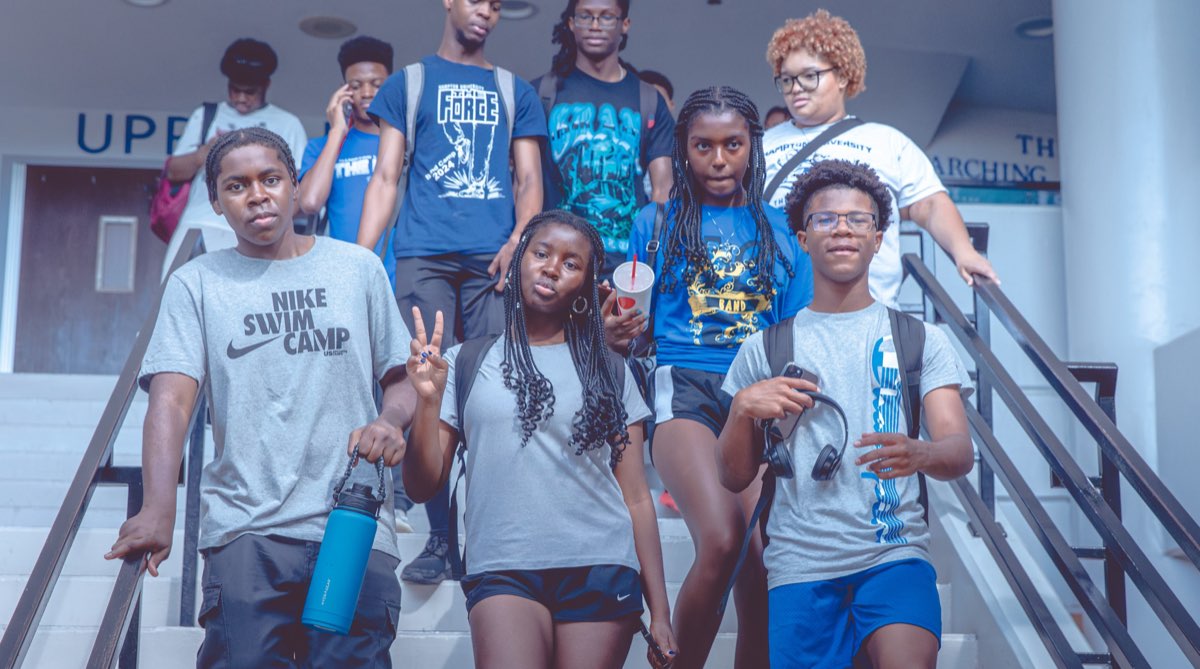
II

Purpose

The purpose of the Hampton University Marching Force is to create an enriching musical environment that empowers students to excel as performers, scholars, and leaders. We exist to cultivate discipline, creativity, and character through music while providing experiences that uplift our community, preserve our legacy, and inspire excellence in all areas of life.

III

Mission

The mission of the Hampton University Marching Force is to deliver world-class performances that reflect the heritage and pride of Hampton University, foster academic and personal growth among our members, and develop students into leaders of integrity and high moral character. Through rigorous musicianship, servant-leadership, and a commitment to excellence, we prepare our students to succeed on the field, in the classroom, and in their future endeavors.